A well-considered choice of sports backpack quite often translates into a truly more serene daily organization. Between the search for the right volume, durable materials, clever modularity, and real comfort points for carrying, the range of models available today makes it possible to reconcile logistical constraints, personal tastes, and demanding schedule requirements. Whether you’re juggling parenthood and sports sessions or prioritizing simplicity, the balance between quality, price, and durability (not forgetting reassuring warranties) helps you find the right model without compromising either style or functionality. Some users say the right bag saves them from many oversights or frustrations during their daily commutes!
Sports Backpack – How to Choose the Right Model, Simply Put
The question of the “best bag” comes up regularly: how to avoid making a mistake to ensure an easier life? The essentials are mainly found in the classic criteria: volume aligned with the activity, solid fabrics (like nylon or polyester), clever internal organization, and real carrying comfort. Here’s what to remember: for the gym or running, count on a volume between 20 and 35 L; for multiple or collective use, it’s better to aim for 30 to 50 L. Some references like Herschel Sutton or Eastpak Stand+ check most of the boxes, with a frequent price range between $40 and $115. In 2024, the modularity of spaces (compartments, practical accessories) remains a real trend, as does great durability (some warranties go up to 30 years). A specialized trainer shares that many gain freedom as soon as they treat themselves to a model well suited to their lifestyle.
Choosing the Backpack Adapted to Your Practice
It’s hard to deny: the backpack of a fitness enthusiast won’t have the same constraints at all as that of a hiking or soccer fan. It’s better to clarify your needs from the start. The sporting activity, frequency, and duration of use significantly influence the final choice, and given the extent of the offer, you can quickly hesitate!
Understanding Needs According to Activity
The bag’s capacity and practicality are closely linked to the discipline practiced: running, fitness, team sports, indoor or outdoor sessions. For a runner, the priority remains lightness (less than 20 L). Conversely, those who do weight training or team sports opt for more space (30 to 45 L), to fit everything without forcing: shoes, clothes, water bottle, and sometimes small shower supplies, even a laptop.
A few benchmarks will guide you:
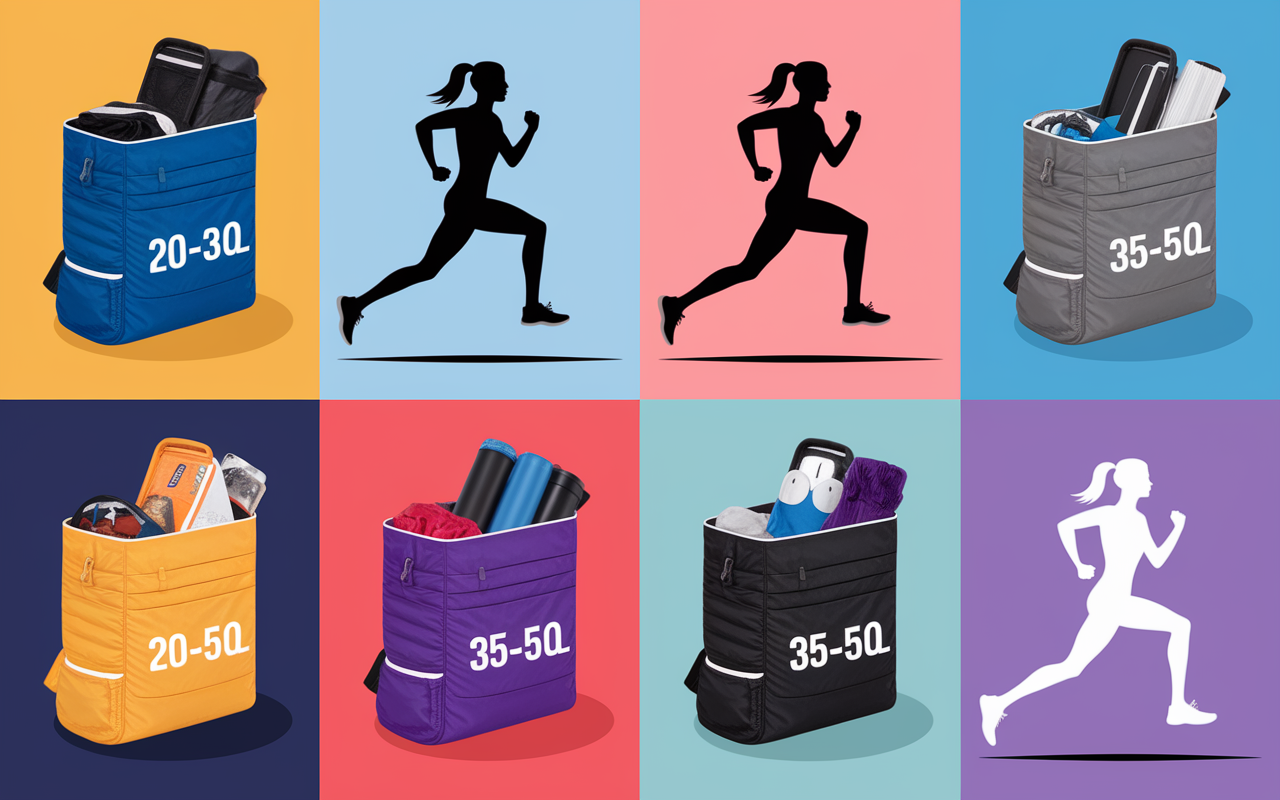
- If you practice fitness, a compact model of 20 to 30 L has the advantage.
- Where swimming requires transporting wet equipment, prioritize lined or reinforced ventilation compartments.
- Team sport or collective practice? A volume of 35 to 50 L prevents shortages, especially if you share equipment and accessories.
- Office and gym mix, consider 25-35 L with a separate laptop pocket.
Concretely, carrying a pair of sneakers with an old sweatshirt and a water bottle is easily managed with 25 L but as soon as a towel or accessories are added, a smaller volume can become a source of frustration. Some athletes also relate that they hesitated for a long time before adopting the ideal configuration!
Duffel or Backpack? The Real Usage Question
The duffel remains unbeatable among fans of teams or generous locker room spaces, while a backpack offers advantages in daily life: urban mobility, bike trips, hands-free practicality. Many professionals believe that the hybrid bag with a handle and adjustable straps appeals precisely to the most active people.
How to decide? Those who often travel by public transport or bike find nothing more efficient than the backpack, discreet and maneuverable. On the other hand, for tournaments or team equipment, the duffel (40-60 L) scores big on capacity. Is it really effective to abandon the traditional duffel? For some seasoned athletes, the dual use of the backpack changes the game in organizing weeks.
Volume, Fabrics and Modularity: Understanding the Differences
Determining the right capacity or the most suitable fabric sometimes seems like a puzzle… but a few benchmarks are enough to avoid regretting your purchase later. The dilemma is never simple: is it better to have a bag that’s too narrow or too bulky?
Volume: Comparative Table by Sport
| Sport/Use | Recommended Volume (L) |
|---|---|
| Running/short training | 14-22 |
| Fitness/classic gym | 25-35 |
| Team sports (soccer, handball…) | 35-50 |
| Daily versatile use | 30-40 |
| Hiking/outdoor | 30-50+ |
It’s regularly observed that 25 to 35 L covers the vast majority of “gym” needs or sporty commuting profile – this capacity remains the right compromise between versatility and carrying simplicity. A gym coach recently mentioned that his trainees always come back to this format after several tries.
Materials: Resistance, Maintenance and Feel
Nylon, polyester or canvas: each textile pattern has its advantages. Many experts point to nylon for its remarkable waterproofing, softness, and abrasion resistance, while polyester wins votes for lightness, affordable cost, and quick drying.
- 600D or 1000D nylon is the benchmark for hiking or demanding environments: it resists wear, friction, and showers better.
- Polyester (600D/900D) stands out for its lightness and ease of maintenance, ideal for the gym or urban commutes.
- “Ripstop” or “water-repellent” systems are frequently touted for their lifespan – some models go through several seasons without aging.
And for washing? Models are generally made for hand washing or at 86°F. However, be careful with very technical bags (rigid structure, special membranes), which are better maintained outside the machine. In practice, hasty washing can damage the fibers, as some specialists point out.
Modularity and Internal Organization
Some users testify: the design of internal storage is never trivial and can really make daily life easier when the schedule picks up. MOLLE system, separate pockets for shoes, spaces for water bottle or laptop, ventilated micro-pockets… this modularity is highly appreciated according to customer feedback: “Impossible to find my wet t-shirt on my laptop thanks to the right compartment!”
It’s generally recommended to check that the bag offers 2 to 4 distinct storage spaces, a criterion widely praised by those who go from leisure use to more intensive sport-office use.
Morphological Tips, Carrying and Comfort
A backpack that slips off the shoulders or weighs on the neck can quickly turn a simple trip into a source of daily discomfort. Some sports specialists say that ergonomics is never superfluous, especially if the content exceeds 11 lbs.
Adjustment and Morphological Adaptation
Major brands (Eastpak, Decathlon, Phantom Athletics…) have developed easily adjustable straps, sometimes combined with a chest strap or waist belt. This helps better balance the load near the center of gravity and adapt the carrying to one’s morphology. A small test is regularly useful: try the bag filled, observe if the back is padded, with ventilated mesh or honeycomb structure, breathing is better during sustained efforts.
- Back length: make sure the bottom of the bag doesn’t go below the waist, for comfortable trips.
- Strap width: prefer 2.5 to 3 inches, that’s optimal for reducing pressure.
- Empty bag weight: varies from 1.1 lbs (compact model) to 2.6 lbs for the most versatile bags.
In case of sensitive back or long trips, it’s worth opting for thick straps or reinforced lumbar support, a detail often ignored until fatigue sets in. A physical therapist frequently reminds her patients of this after a competition!
Practical Testing and Real Feel
Whether you’re a young professional, active parent, or public transport fan, nothing beats a real-life test: load your future bag as for a typical day, walk 10 minutes and take the time to feel the weight. Customers quickly point out the models whose straps hurt, compared to those that are almost forgotten.
It’s observed that most of the weight (up to 80%) should be supported by the lower back rather than the shoulders. In-store, it’s often useful to try several configurations, some stores even offer weights and demonstration equipment to ensure the right choice. Have you ever compared two variants with different volumes? An experienced saleswoman reported that practical testing helped more than one customer avoid unexpected pain after purchase.
Model Focus: Concrete Examples and Prices
In 2024, the major collections focus on comfort and reliability at accessible prices, supported by generally enthusiastic customer feedback. You can easily find a relevant model, regardless of your profile or practice.
Some Key Models and Their Strengths
Here’s an overview from current ranges and field testing:
- The Herschel Sutton Mid-Volume offers a versatile design, a capacity of 28 L, proven resistance and easy-access pockets, between $65 and $85.
- The Eastpak Stand+ remains a praised classic, wide opening, 41 L, easy maintenance, in a $59-79 range, and a record warranty of 30 years.
- The Decathlon Kipsta Essential: with its remarkable value for money, 35 L, it appeals to families or children, under $30 and rated 4.7/5 based on more than 3,000 reviews.
- The Phantom Athletics Pro Gym stands out for its technical features, 45 L expandable, MOLLE system, priced at $95-110, scores of 4.8/5 on 4,800 reviews.
The results in this category remain excellent: most display scores between 4.6 and 4.9/5 with a vast majority of users satisfied with durability or clever accessories.
Let’s add that many stores facilitate decision-making with free shipping from $40-60, free returns for a month, and installment payment options from $50. Some buyers say the return policy gives them confidence on models they hesitated to adopt.
Reassurance, Warranties and Customer Returns
It’s noted in many testimonials: purchasing is significantly more serene when the store offers solid warranties, especially online. Returns and customer service advice often make all the difference in the final decision. A retail specialist notes that many customers first rely on customer service before comparing technical aspects of the product.
If you’re an avid water sports enthusiast, you might also want to explore the differences between windfoil and wingfoil to find the perfect discipline that complements your active lifestyle.
For those who enjoy outdoor adventures, pairing the perfect sports backpack with insights from this expert guide on top kayak brands for 2026 ensures you’re fully equipped for any journey.
Shipping, Warranties, Customer Service… What to Expect?
Most major retailers (Eastpak, Gymshark, Phantom Athletics, Decathlon) now advance reassuring arguments: free shipping from $40 or $59, free return options for 30 to 45 days, and record warranties up to 30 years (Eastpak holds the record). These elements are valued through reassuring icons or information bars in the customer journey.
Let’s add that installment payment in 3 interest-free payments from $50 or $100 is developing, which facilitates the purchase of more demanding models. According to a customer satisfaction study, 80 to 95% of buyers say they are satisfied or very satisfied (on scores of 4.0 to 4.9/5 for the main ranges, sometimes up to 4,800 reviews).
Customer Reviews and Concrete Proof
Studying customer reviews has become a must – often relegating technical specifications to second place. Recently, several testimonials highlight:
- The simplicity of returns in case of error on size or use.
- Durability confirmed after one or two years of use, a strong point rarely contested.
- Internal organization that really allows storing all belongings without having to squeeze them too much.
If in doubt, know that support space or FAQ is accessible on most stores: instant chat, direct email contact. An informed advisor regularly reminds: a question asked, even on a detail like the exact length or empty bag weight, helps lift a real barrier or avoid a small disappointment.
FAQ: Your Questions About Sports Bags
Some points remain unclear at the time of choice: here are precise answers to simplify decision-making.
What Volume of Backpack for the Gym?
For gym sessions where you don’t have bulky accessories, a bag between 20 and 35 L is more than enough. This format allows you to carry clothes, sneakers, small towel, bottle and usual personal effects – some beginner customers discover that it’s not necessary to go too big from the start.
Nylon or Polyester: Which to Choose?
Nylon is recommended for outdoor sports or less covered facilities (more waterproof and solid), polyester for light use, easy to maintain, which adapts perfectly to gym needs.
How to Know if the Bag Fits Your Body Type?
The key criterion: the bottom of the bag should never go below the waist, especially when loaded. Testing is crucial: adjust the straps well and take a few steps, without pain or discomfort. For people of small stature, it’s better to reserve 22-28 L, more suited to daily life. It happens that a customer thinks they’ve found the perfect bag in a catalog, only to realize that the actual carrying is not compatible with their body type.
Can a Sports Backpack Be Used for the Office or Daily Life?
Absolutely, many models are designed for this “hybrid” use: laptop pocket, practical interior organization, sober lines. This versatility even marks a strong trend in 2024 urban collections – a collection manager mentioned that the adoption of convertible formats greatly facilitates weeks of work at a sustained pace.
What Are the Best Affordable Brands?
According to reviews and comparisons in 2024, Decathlon, Eastpak, Gymshark, and Herschel stand out for their value for money and reputed reliable customer service. Prices range from $29 for entry-level to $110 for premium models, while satisfaction scores regularly exceed 4.5/5.
Do you have a specific doubt or morphological question? Major sites now offer an interactive guide, chat, or dedicated hotline. Daring to ask remains the best way to move forward without regret – and, as a sports marketing specialist reminds us, it’s not always easy to anticipate everything alone before buying.