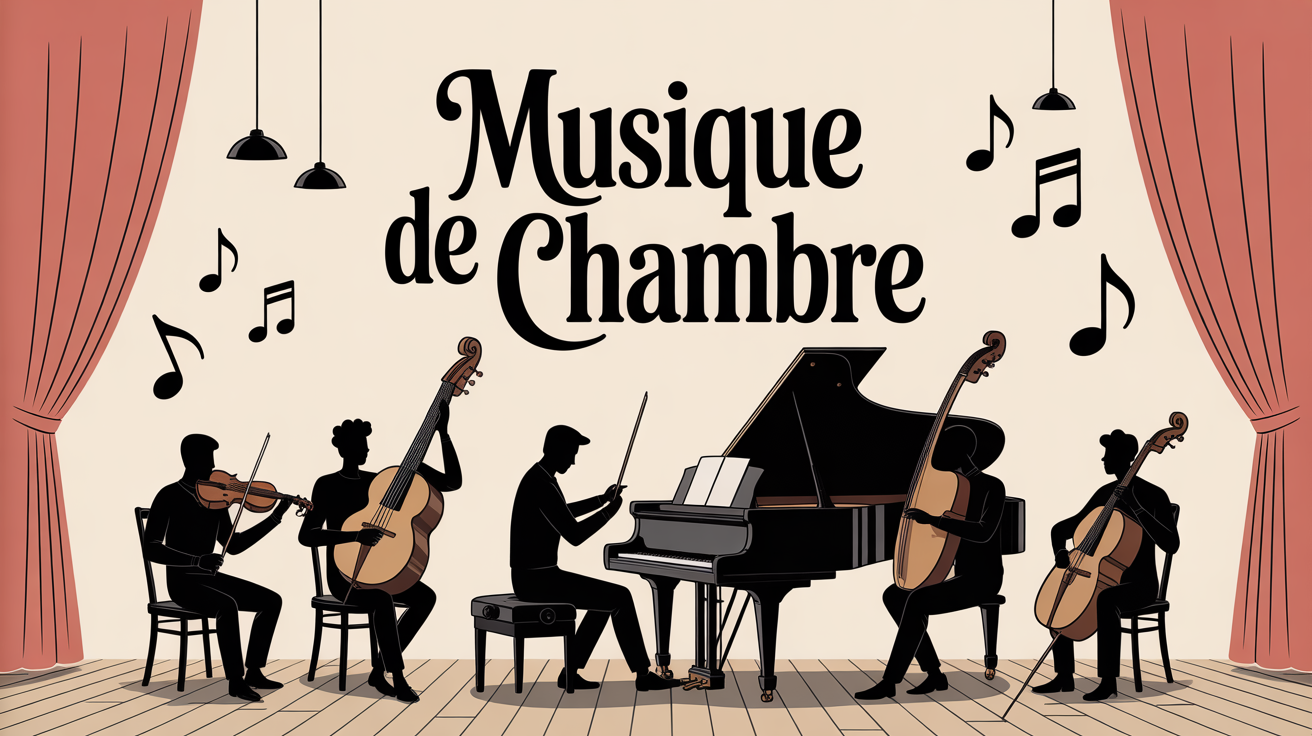
In the intimate world of chamber music, each note takes on a special meaning, weaving a complicit dialogue where attentive listening makes all the difference; whether spectators or performers, everyone finds their place in this intimate repertoire, reflecting a rich history full of nuances and a source of ever-renewed discoveries, beyond simple classical concerts or the usual codes of symphonic music. A trainer mentioned that musicians sometimes feel like they’re in a musical parenthesis, conducive to benevolent exchange.
Chamber Music: Quick Definition and Immediate Discovery
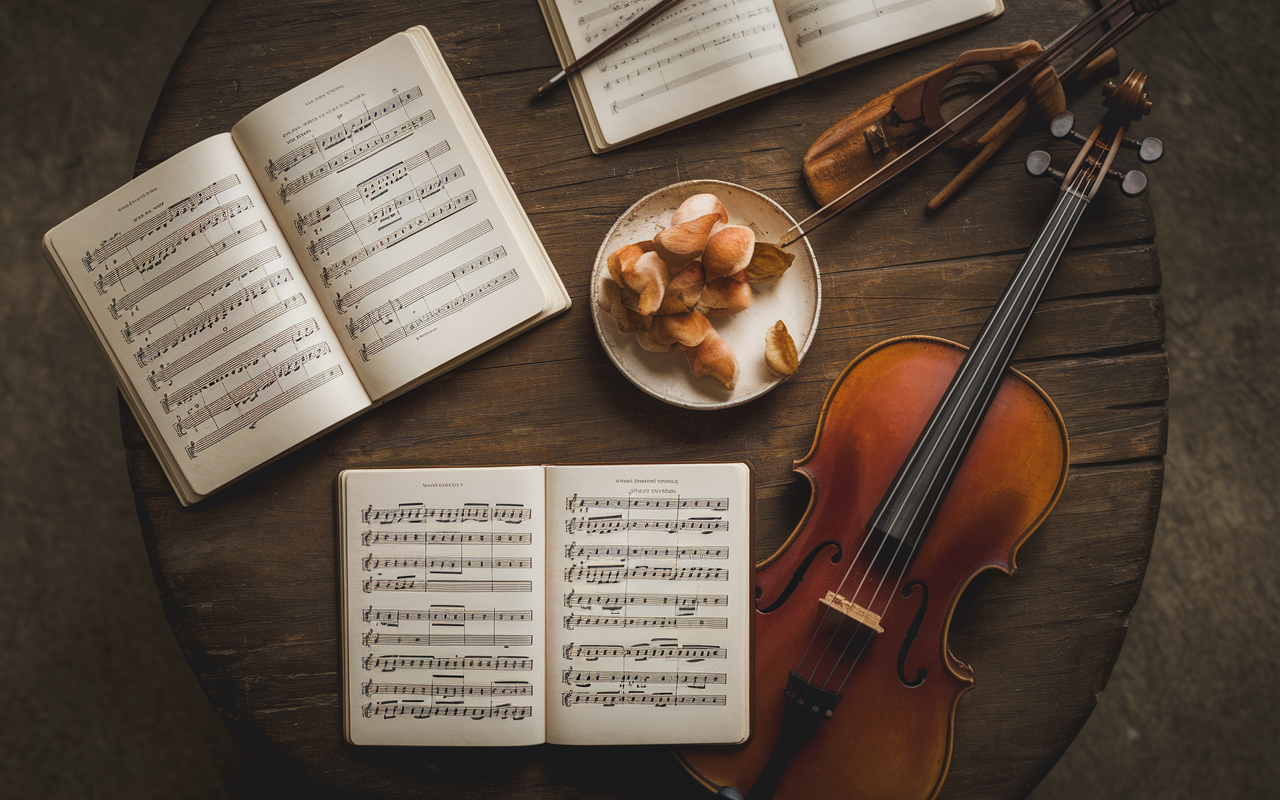
Chamber music is defined as a classical genre designed for small ensembles – generally between 2 and 10 musicians – without the direction of a conductor, and favoring more intimate spaces than large concert halls. The typical experience? A string quartet or piano-violin-cello trio dialoguing “as if around a table,” to use an image regularly employed by professionals. The goal is subtle listening and interplay between instruments – many compare it to a conversation, at a scale where every nuance counts.
Another point, this practice attracts both seasoned enthusiasts and curious people seeking new musical sensations. Certainly, it’s not surprising when you notice that the term generates more than 900 monthly searches on Pinterest, proof that the desire to create one’s own musical universe at home resonates with many.
A Genre Born in Confidence: Origins and Evolution
Imagine an evening lit by candlelight, where musicians and listeners share the same space: it’s in this atmosphere that chamber music developed, from the 17th century onward, primarily in the aristocratic salons of Europe. Composers then wrote for reduced ensembles – duo, trio, quartet, quintet – highlighting sonic proximity. Some period accounts tell how the boundary between performers and audience was often blurred, with everyone able to intervene or react in real time.
Over time, the tradition evolved. Haydn structured the string quartet, Beethoven added an unprecedented gravity, and the repertoire expanded its audience through the opening of dedicated “small halls.” Let’s add that the Eiffel Tower Theater in Paris and several festivals or brunch-concerts today embody this experience, erasing the barrier between artists and spectators. For many, attending a chamber concert with fewer than 200 people remains a unique experience, where listening becomes almost tactile.
- Birth in the 17th century in private salons, fostering proximity between musicians and audience
- Opening toward dedicated halls from the 19th century, then in major cities in the 20th century
- Contemporary expansion: multiplication of festivals, brunch-concerts or musical cafes in Paris and elsewhere, offering a real connection with the community
Professionals in the sector, such as those at the Paris Philharmonic, estimate that these festivals sometimes gather several hundred listeners per season, while maintaining the intimate spirit that characterizes the genre.
Good to Know
I recommend attending these small concerts where proximity to the musicians creates a unique experience, rarely found in large halls.
Essential Musical Characteristics: The Art of Balance
It’s impossible to discuss chamber music without mentioning the subtlety of interactions: each instrument has its say. We regularly observe that the repertoire relies on a balance of voices, with each musician taking turns as soloist while dialoguing with the group. This dynamic is also expressed in the diversity of playing modes: from the bow barely touching the strings to the discreet pizzicato, including extreme contrasts – from pianissimo to brilliant fortissimo. Some enthusiasts relate that a simple finger slide during a piano passage evokes unexpected emotion and creates all the magic of live performance.
- No conductor – the group collectively builds the interpretation, which requires listening and flexibility. Some educators remind us that this “forges listening” like nowhere else
- Varied tessitura, where the cello responds to the violins or the flute discreetly inserts itself between viola and piano
- Natural acoustics: no microphones, everything relies on the hall and instrumental mastery, reinforcing this sought-after proximity
In practice, during a Ravel concert in a small hall, a listener might say they “hear the music breathe” – an impression reported multiple times by regulars. Is this really what one feels at every performance? Nothing excludes that chamber music has this power to touch differently, while maintaining a form of risk and authenticity.
Key Composers and Works to (Re)Discover
How to approach the chamber music “playlist” without getting lost in the immensity of its repertoire? It’s regularly recommended to start with a few essential composers, each having left their personal mark on the genre. Some educators suggest listening to the works in chronological order to better grasp stylistic evolutions. Furthermore, some anecdotes show that aesthetic appreciation often comes by chance, during a concert or through sharing among friends.
- Haydn, frequently considered the “father of the string quartet.” The Quartet Op. 76 No. 3 is generally cited as an accessible entry point.
- Mozart: his Clarinet Quintets and the famous “Dissonances” Quartet are regularly performed in festival programs for their harmonic richness.
- Beethoven: his late quartets, including opus 131, present an intensity that moves even experienced listeners.
- Schubert: the “Trout” Quintet evokes lightness, while the “Death and the Maiden” Quartet impresses with its dramatic force.
- Ravel: his String Quartet offers a vision of French musical modernity that many love to rediscover.
- Bartok, for those seeking sonic adventure – his quartets reveal a sometimes disconcerting but fascinating universe.
Today there are free playlists on Spotify or YouTube showcasing these works, to be listened to in the comfort of your living room. One last detail to note: nearly 932 monthly searches revolve around “music room,” mainly to gather decor ideas or atmospheres conducive to listening in one’s home.
Summary of Key Points
- Chamber music is played in small ensembles without a conductor, emphasizing proximity and listening
- Its origin dates back to the aristocratic salons of the 17th century with strong interaction between musicians and audience
- Key composers like Haydn, Mozart, and Beethoven marked its evolution and offer emblematic works
Chamber Music vs Symphony: A Question of Scale and Dialogues
Chamber music and symphonic music are sometimes confused, yet it’s not just a matter of numbers: it’s also the atmosphere that changes. The symphony frequently brings together 50 to 100 musicians under the direction of a conductor, favoring collective impact and spectacular dimension.
Conversely, chamber music cultivates exchange in small groups: each instrument occupies a central place, the listener can follow all melodic lines, and expressive subtlety prevails over power. It’s a bit like comparing the warm tumult of a banquet to the delicacy of a dinner among close friends…
| Chamber Music | Symphonic Music |
|---|---|
| 2 to 10 musicians, no conductor | 50 to 100 musicians, direction provided by a conductor |
| Close dialogue, valorization of each part | Mass effect, grandiose orchestral dimension |
| Small halls or various intimate venues | Auditoriums, opera houses, monumental halls |
A question heard in audience ranks: “Do you feel the music less when there are fewer instruments?” Many specialists remind us that it’s quite the opposite: here one opens to a different force, made of subtle details, expressive silences, and an enveloping proximity that’s sometimes overwhelming. Some confide that this intensity inspires more during the simplest moments.
Where to Listen, Feel, and Meet the Community Today?
The expression “music room” could once rhyme with refined private salons, but today it radiates in a plurality of places: specialized spaces such as the Paris Chamber Music Center, major institutions (the Philharmonic), or atypical settings such as barges and cafes. We notice that the Parisian agenda often offers brunch-concert events around 11 AM (note for example the date of June 22, 2025), to combine musical pleasure and friendly encounters. It happens that an enthusiast discovers their passion during a morning concert, simply seduced by the proximity to the artists.
- Iconic venues (Eiffel Tower Theater, barge on the Seine…), but also community venues promoting discovery for all
- Classical festivals bringing together accessible chamber programming, regardless of your city
- Clubs and communities: membership often guarantees reduced rates and access to private meetings
- Digital exploration: free streaming, specialized podcasts or commented playlists offer everyone a gateway to this musical universe
One sometimes overlooked point: a donation of $1,000 to the Chamber Music Center can actually cost you only $340 after tax deduction. This is also why some enthusiasts choose to support creation while offering themselves a musical privilege and the opportunity to forge connections with the current scene.
Good to Know
I recommend checking the dates and times of brunch concerts carefully to enjoy a friendly moment combining music and relaxation.
Music Room Decor: Ideas and Inspiration in Images
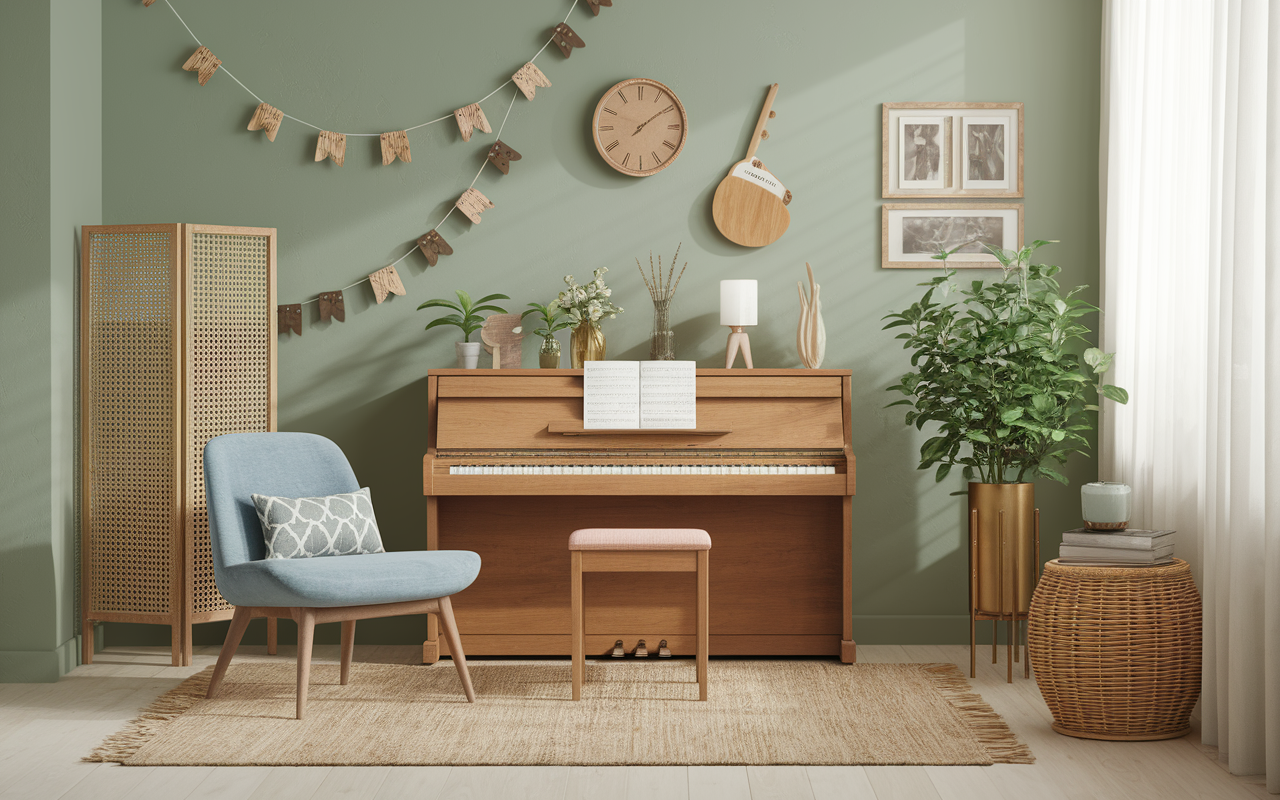
What if musical passion could also enrich your interior decoration? On Pinterest, music room inspires more than 900 monthly searches, proof of a real enthusiasm for arranging spaces conducive to listening. Specialized decorators relate that simply integrating a musical touch at home often unlocks creativity and well-being for the whole family.
- Create a central instrument corner – piano, guitar or violin – that catches the eye and invites sharing
- Enhance the walls: framed scores, collector vinyls or posters from past concerts add real visual history
- Preferred palette: choosing sober colors (midnight blue, olive green), and warm materials like wood or velvet amplifies intimacy
- DIY ideas: note garlands, adjustable lighting or modular furniture give soul to the room
No need to be an accomplished musician to transform your space – installing a reading chair or a mini-library with scores is sometimes enough to create the desired atmosphere. Besides, some visitors don’t hesitate to share their own story in front of an instrument displayed on the wall. This seems to bring generations together around a common memory. It’s not always easy to get started, but the result is often worth it.
Quick FAQ and Landmarks for Getting Started
Here’s a mini-guide that brings together the essential questions for a serene introduction to chamber music:
- Definition: Chamber music is distinguished by a small ensemble, without a conductor, encouraging proximity and the interplay of instruments-voices dialogues.
- Most common instruments: Violin, viola, cello, piano, flute, clarinet – each ensemble offers its own combinations.
- Where to listen: Specialized spaces (Paris, major cities), festivals and streaming platforms are the main options.
- Difference from “chamber orchestra”? The chamber orchestra brings together about twenty musicians: the result is more “collective,” whereas quartet or trio formations remain necessarily more intimate.
- Usual entry price: Generally count $10 to $30 for a standard seat, sometimes less during brunches or if you join a club.
To learn more or find additional practical resources, don’t hesitate to consult the dedicated agenda, ticketing or decor inspiration galleries. Let’s add that subscribing to the newsletter of cultural institutions allows you to receive new ideas and invitations tailored to all tastes every month.