
The shotgun start brings a unique energy to golf, with all groups beginning on a specific hole at the same time. This organizational method truly promotes exchanges and makes room for everyone, regardless of skill level or experience – beginners and families alike can enjoy it. This approach requires new attention to course management; it also encourages mutual assistance and sharing tips, all within an atmosphere of camaraderie enhanced by the collective event.
What is a shotgun start in golf?
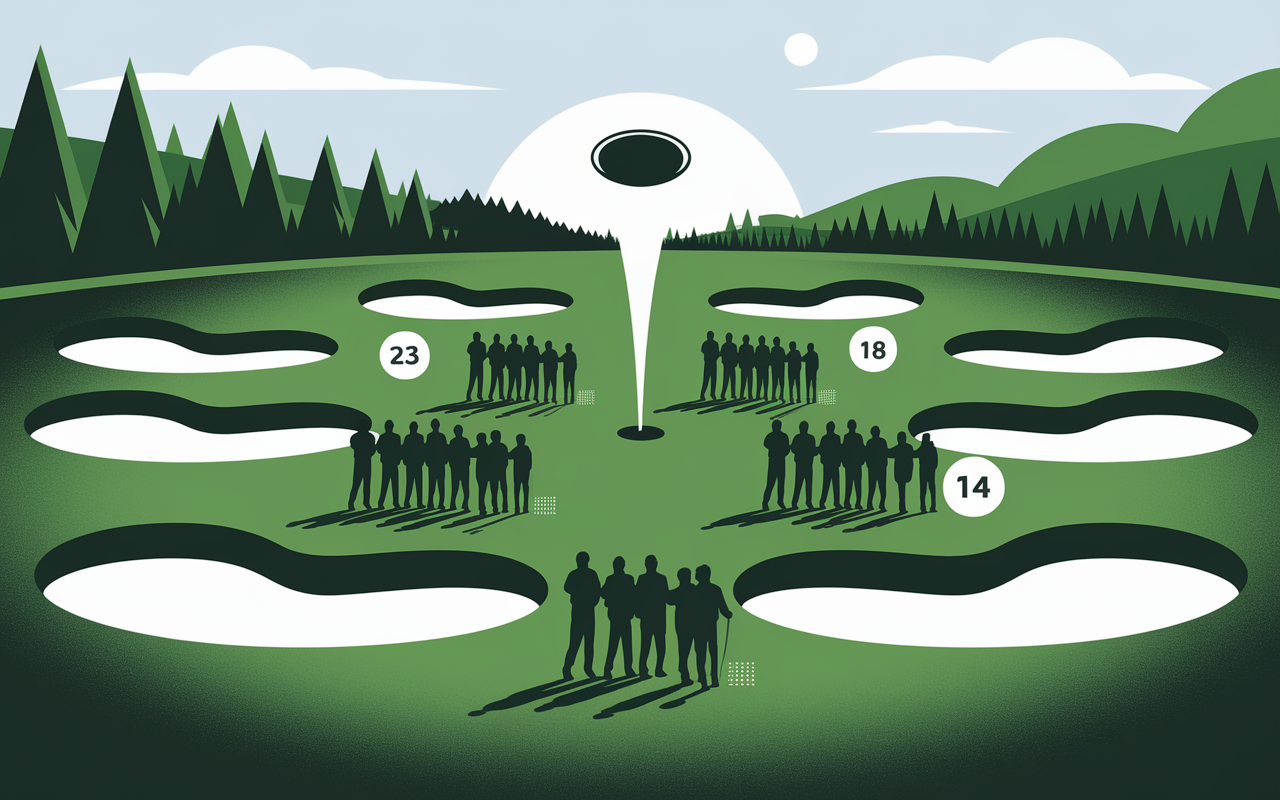
Imagine this scenario: instead of waiting at the first hole, each group starts at the same time, but on holes spread throughout the course. This is exactly what characterizes the shotgun start in golf; the signal is given (horn, or for historical context, the “gunshot” at major historical tournaments), and the round begins instantly. Another point: this format improves time management for everyone, especially during high-attendance competitions, and transforms the atmosphere into a truly shared event.
In the shotgun format, groups are distributed across all the holes – the principle is to play through the round in the usual order, with each group having started on a different hole. This generally results in a common finish time and allows for precise timing – in most competitions, everything is finished in 4 to 5 hours, whereas a traditional round can stretch up to 10 hours. A passionate amateur recently testified that he prefers this fluid rhythm to the timed waiting of the traditional “single file” approach.
An amusing detail: the term “shotgun” comes solely from the simultaneous start signal and has no connection to the use of a firearm on the course. Some major events, such as LIV Golf circuit tournaments, use it to intensify the spectacle and interest of television broadcasts.
Simple definition and origin of the shotgun format
The starting signal, whether a horn or sound announcement, marks the opening for all groups. On some courses, it’s not uncommon for two groups to share the long holes (par 5s), while in cases of very high attendance, three teams sometimes set up simultaneously. The atmosphere remains dynamic, but vigilance is required to avoid blockages and confusion: organizers keep a close watch.
- General synchronization begins with 18 groups on 18 holes, allowing everyone to play without waiting.
- A briefing is organized about 15 to 20 minutes before the start, reviewing assignments and detailed instructions.
- Each team manages their scores hole by hole, advances in the normal rotation, and shares the collective spirit of the format.
- It’s regularly observed at the end of play that all groups finish together, thus reinforcing camaraderie.
On this topic, an event organizer shared that it’s not uncommon to see hesitant beginners surprised by the fluidity: even the least experienced find their rhythm thanks to cohesive teams and attentive supervision.
Summary of key points
- The shotgun start has all groups begin simultaneously on different holes, optimizing time management.
- This format promotes mutual assistance, camaraderie, and often allows for a common finish time.
- Pre-departure briefings are essential to ensure smooth organization and avoid blockages.
How to prepare for the shotgun format?
Participating in this type of tournament requires some adjustments, essential to fully enjoy the experience. Especially for a first time, preparing your day and checking with the club facilitates getting started – some members share that collective preparation helped them overcome the small stresses of the start.
Organization checklist and practical tips
It’s best to start by looking at your club’s information sheet, as each environment has its own habits. A gathering is systematically organized beforehand: arriving on time and staying focused are real allies. A good practice is to check your equipment, your assigned hole, and sometimes plan a snack if the competition looks long. Many clubs institutionalize a snack break between holes 9 and 18 to maintain camaraderie.
- Think about equipment: clubs, balls, and water; the scorecard is generally provided at the briefing.
- Identify your starting hole: some are far from the clubhouse, so it’s worth planning the route ahead.
- A short warm-up on the practice range helps you start on the right foot.
- The snack break: for large groups, it punctuates the day and allows you to recharge.
You’ll often find organizers offering personalized maps or a digital version of the course layout, which simplifies navigation and reduces uncertainty. Also, asking the question “Which hole do I start from, and with whom?” can avoid many unnecessary trips: some regret having neglected this point during their first experience.
Etiquette and group management for beginners
This format includes novices as much as regulars. For a first time, net or Stableford variants are recommended, as they award points without focusing on gross score – an option that many club officials praise for preserving good spirits among children and families (Theodore also appreciates it…). Regularly asking advice from the local organization facilitates setting up a suitable group.
Mutual assistance develops naturally: it happens that an experienced person accompanies newcomers, creating a more homogeneous and reassuring team. A trainer recently emphasized that joining a community before the tournament, even online, allows exchanging tips and easing apprehension about the unknown.
Good to know
I strongly recommend checking your starting hole and equipment before the tournament. Arriving on time for the briefing helps avoid a lot of stress and promotes smooth organization during the shotgun start.
Advantages and points of caution
The speed of the shotgun and the collective dimension are appreciated, but still: a bit of logistical preparation is preferable to avoid bottlenecks and misunderstandings. Some compare the movement of groups on the course to a fluid choreography where everyone must know their place – without that, the rhythm can break down.
Time savings and friendly atmosphere
With the shotgun, the competition ends in half a day: a handful of hours for 18 holes, compared to often 8 to 10 hours in a traditional format depending on the number of people. This sustained tempo spontaneously promotes meetings at the green, gatherings at the end of the round, and a festive atmosphere, which a regular recently described as “incomparable” in his memories.
One last point to note: team spirit and camaraderie dominate in player feedback, and many organizers rely on this format to energize their tournaments, whether corporate or charitable.
Organizational risks and simple solutions
To be honest, the main concern remains possible bottlenecks on long holes, or groups waiting before resuming the course. To smooth things out: assign two teams to par 5s, organize staggered starts (“flyers”), and clearly specify priorities at the briefing. Some clubs have pros or the fastest teams start first – this feasible option, cited by several managers, significantly limits traffic jams.
- For 36 players: consider alternating or sharing on long starts, with two groups per hole if needed.
- In case of delay, the option of a sound reminder or quick message via the club app is commonly used.
Access for beginners depends mainly on the scoring system in place: collective formats like “scramble” (the team plays each best shot) make the shotgun accessible to everyone, even the least experienced. Is it really effective for novice players? One can assume yes, provided the explanation and supervision are well done.
A memory that often comes up among organizers: during a family tournament, each hole offered a specific activity for children and beginners, transforming the event into a relaxed and inclusive local celebration.