As pure players are now disrupting traditional retail habits, understanding this 100% digital model helps better grasp its advantages, but also its concrete constraints. An experience without physical stores, driven by innovation and precise data management, shapes new ways of consuming, doing business, and envisioning success on the internet. Statistics, varied journeys, and real examples offer reliable benchmarks here to fully appreciate the influence of a pure player on current e-commerce strategies.
Simple and quick definition of pure player
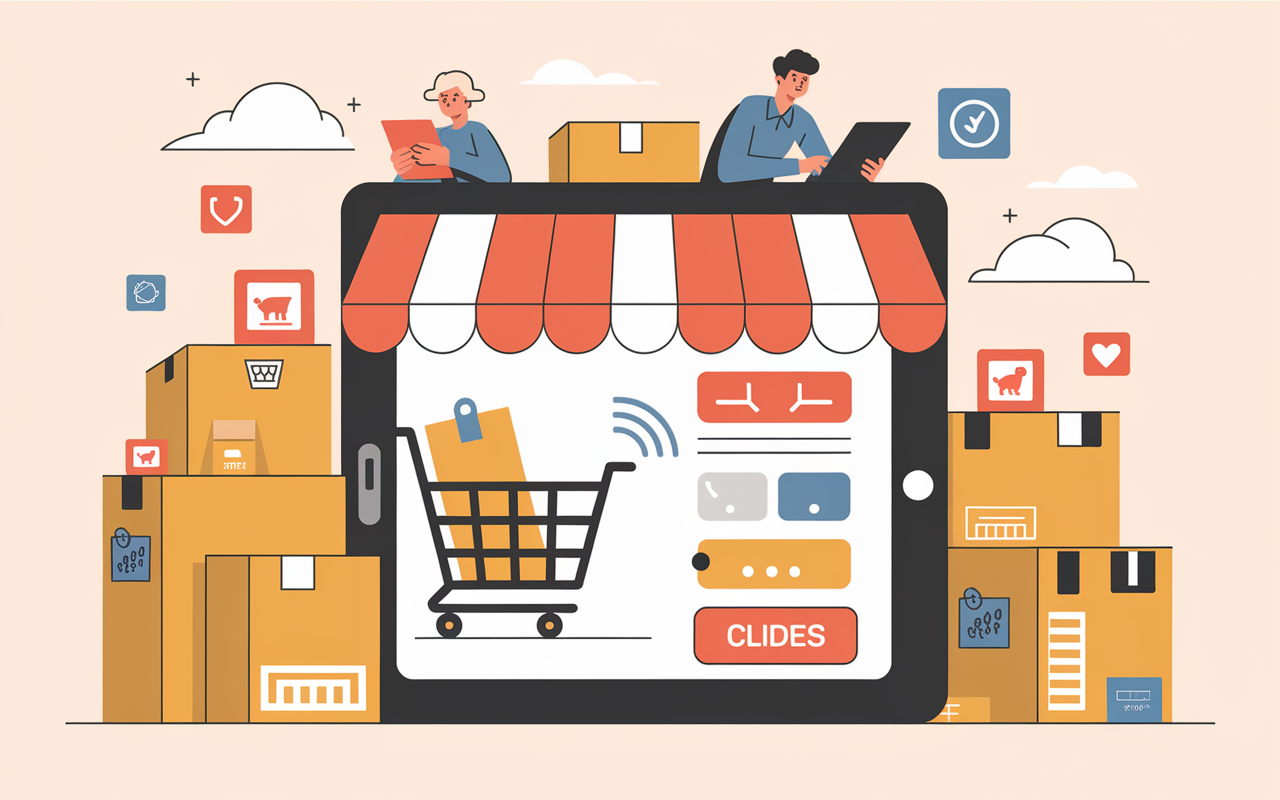
A pure player is a company whose entire commercial activity takes place online, without physical stores or public counters. In other words, the entire journey happens on the web: from the storefront to the purchase, the customer relationship takes shape via a website or application. It’s not possible for the user to go see or touch the product on site – everything is designed digitally.
To illustrate concretely, think of Amazon, Zalando, or Vinted – no accessible point of sale: every step from the initial click to the final delivery takes place virtually. This extreme digitalization is the distinctive feature of the pure player model.
For reference, Amazon France reported revenue of $3.1 billion in 2018, obtained exclusively on the Internet. This demonstrates the power of this model… while keeping in mind the obstacles it imposes.
Origin and evolution of the term pure player
Originally, “pure player” comes from financial language – “pure play” designated a company focused on a single activity, without diversification. Starting in the 2000s, the term was adopted in marketing and digital commerce: it characterizes 100% digital companies capable of developing without traditional points of sale.
The shift accelerated with web giants – Amazon leading the way – who redefined the retail landscape in less than twenty years. Some remember a time when buying online was considered risky or marginal; today, pure player status is almost synonymous with innovation and agility for many industry players.
A small anecdote mentioned at an e-commerce conference: in 2026, the massive introduction of artificial intelligence and machine learning allows pure players to personalize the customer journey much more finely, profoundly redefining professions and digital strategies.
Iconic examples and key figures
To measure the phenomenon, nothing beats concrete cases. Here is a selection of pure players that serve as references in French and global e-commerce, accompanied by telling data –
- Amazon France: an impressive revenue of $3.1 billion in 2018 (+44% year-over-year), without any customer-dedicated premises
- Vinted: more than 45 million active members, with success built solely on the web, without physical store or corner
- Zalando: $420 million revenue in France for 2018, representing +8% growth over the previous year, online fashion leader
- Oscaro: an average of 8,000 orders shipped every day (2018), with an offering of 750,000 auto parts references online
- Veepee (formerly vente-privee): nearly $2.1 billion in revenue in 2018; leader in flash sales without store networks
In practice, these figures demonstrate the ability of pure players to capture massive audiences, regularly far exceeding those of physical retailers in the same sectors. Some e-commerce experts believe that digital firepower explains these major gaps.
Key Points Summary
- A pure player operates 100% online without physical stores.
- Example: Amazon generated $3.1 billion in France in 2018 exclusively online.
- The model relies on digitalization, personalization, and advanced data management.
Structural advantages and disadvantages of the pure player

Many teams ask the question when drafting a business plan: what are the strengths and weaknesses of the pure player model? Let’s review some decisive benchmarks.
Competitive advantages
At the forefront of benefits, cost reduction often comes up. Without premises to rent, with tighter teams, logistics focuses on shipping and digital service. This allows for a more aggressive pricing policy and recurring investments in online advertising or innovation (product and service).
- Relatively developed catalogs that evolve rapidly (e.g.: Oscaro covers 750,000 auto parts references)
- International reach allowing customers abroad to be reached without geographic constraints
- Data management: advanced personalization, tailored loyalty strategies
- Ability to easily reposition on a niche or new trend without changing premises
But field reality certainly has some gray areas…
Obstacles and challenges to overcome
Dependence on digital traffic is the first obstacle: without web visibility, the clientele dries up. Facing giants like Amazon or Alibaba exposes to strong competition, and brand awareness can sometimes be difficult to sustain, making acquisition more costly than expected.
- Demanding logistics management: fast delivery, returns management, every step must reassure
- Emphasis on social proof: the absence of physical space requires relying on customer reviews, labels, or certifications
- Action on loyalty via newsletter, social networks, or referral programs, sometimes necessary to retain customers
As an entrepreneur expert in the sector recently said: “Our main challenge isn’t technology or the offering… but establishing our existence in the web jungle and building trust remotely.” Is it really simple over time? Many agree that it’s not.
Good to Know
I recommend always investing in social proof (customer reviews, certifications) when your activity is 100% digital: it’s often the key to establishing trust remotely.
Comparison of models: pure player, click and mortar, brick and mortar
The format question often arises when choosing between staying digital or investing in a commercial space: each model has its strengths and weaknesses, and finding a miracle option is rare. Giving up a channel sometimes means gaining agility elsewhere.
| Model | Main Characteristics | Advantages | Limitations |
|---|---|---|---|
| Pure player | 100% online, no physical store | Reduced costs, scalability, advanced data, catalog flexibility | Web dependence, complex logistics, trust challenge |
| Click and mortar | Web + physical stores combined | Omnichannel experience, customer proximity, increased trust | High fixed costs, complex management, limited scalability |
| Brick and mortar | 100% physical, no online sales | Direct human relationship, touch/try products, local anchoring | Limited audience, heavy fixed costs, low flexibility |
This summary helps better understand – the pure player puts everything on digital, click and mortar combines both worlds, brick and mortar values local anchoring and direct relationships. The choice of model deeply influences the company’s strategy as well as its perception by customers or investors. A retail trainer recently mentioned that hybridization (physical + web) sometimes becomes mandatory, depending on the target.
Practical FAQ and value-added guides/tools
With the multitude of information circulating about e-commerce, it often seems difficult to easily identify the most relevant resources. Below are answers to frequently asked questions and concrete reference points to dig deeper according to your needs.
Quick FAQ
What exactly is a pure player?
It’s a company selling only through the internet, without commercial premises open to the public.
What examples in France and elsewhere?
Amazon, Vinted, Zalando, Oscaro, Vente-privee immediately come to mind: their 100% web positioning gives them access to millions of customers and revenues exceeding many traditional retailers.
How to become a pure player?
It’s best to focus on a seamless user experience, invest in digital visibility (SEO, social networks), and choose solid logistics partners. Specialized guides – Wizishop ebook, HubSpot studies – are cited by many professionals as valued reference points.
Key resources to explore
- Complete Pure Player Guide – Wizishop (consider consulting the “case studies” section for field feedback)
- Pure Player Definition & Strategies – HubSpot (comparative diagrams are relatively up to date)
- Sign up for industry news alerts: quick to set up, and particularly useful for following trends
- Access to the top 10 pure players (downloadable revenue/audience comparison table to refine your benchmarks)
If you’re looking for tools to compare models: several audience and cost simulators exist (business plan checklists, 5-year ROI calculation). Some professionals also offer customized monitoring or downloadable infographics, practical for arguing with your partners or investors. And in the reality of the sector, nothing precludes a manager refining their choice as opportunities arise… It’s not always obvious, but adaptability remains key.