A central figure in the industry, the music producer combines artistic boldness and technical expertise to shape the sonic identity of projects, often behind the scenes, while maintaining constant dialogue with artists and industry developments. According to many testimonies, the difference between major labels and independents, the explosion of artificial intelligence, and the need for a unique sonic signature have become essential topics for understanding this profession. It’s worth examining a universe where every arrangement choice, every technical adjustment highlights this fragile balance between tradition and innovation.
Key Points Summary
- ✅ The music producer combines artistic creation and technical mastery to define sonic identity.
- ✅ The distinction between majors and independents largely influences resources and artistic freedom.
- ✅ The rise of artificial intelligence transforms methods while maintaining the importance of human creativity.
Definition of the music producer
The music producer often wears the costume of a sonic architect, at the crossroads of artistic creation and commercial management of a musical project. Behind this image, what does this multifaceted profession actually look like in daily practice?
Through the careers of Quincy Jones (producer of Thriller, over 66 million albums sold) or the legendary Phil Spector (25 titles in the Top 40 in five years), everyone can recognize a discreet but decisive touch. The producer pilots the recording, guides arrangement choices, supervises the technical aspects like mixing, and serves as the link between artists, labels, and studios. Many of them take on multiple roles: spotting talent, leading an artistic project from A to Z, occasionally acting as manager or commercial strategist. While some names have remained in the background, their influence is measured by the reach of the albums themselves. Several experts point out that without a producer, some masterpieces would never have achieved the level of finish that earns them their place in music history.
In 2026, the role is evolving rapidly with the advent of digital tools and AI deployment, but the core mission remains – offering a unique sonic color to each track, while respecting both the artist’s vision and audience expectations.
A key player: between technique and inspiration
Being a music producer isn’t simply about adjusting settings in the studio. It’s also about being the craftsman of sonic identity. Mastering multiple techniques – mixing, multitrack production, or experiments like the Wall of Sound – quickly becomes a guiding thread in a career, as many renowned biographies illustrate. This level of expertise is sometimes reflected in international recognition: just look at how many Grammy Awards reward above all the producer’s work (Dr. Dre, David Guetta, Mark Ronson). In short, this profession demands both technical rigor and emotional intuition, as professionals relatively often say.
- You’ll find producers focused on artistic direction, others specialized in pure technique, and increasingly profiles blending both dimensions.
- A producer’s weight is regularly measured through figures – record sales or cult tracks. Take the example of Butch Vig: 17 million albums with Garbage, a career that durably marks the sector.
- For some artists, a producer’s unique touch is of paramount importance for breaking internationally; the “sonic signature” can open many doors.
This makes some professionals smile: many refine their method in constant exchange with musicians, without resorting to a ready-made recipe. Every album has its share of challenges… And sometimes, unexpected discoveries punctuate a session, as one sound engineer experienced during the creation of a hit track.
Majors vs Independents – key typologies
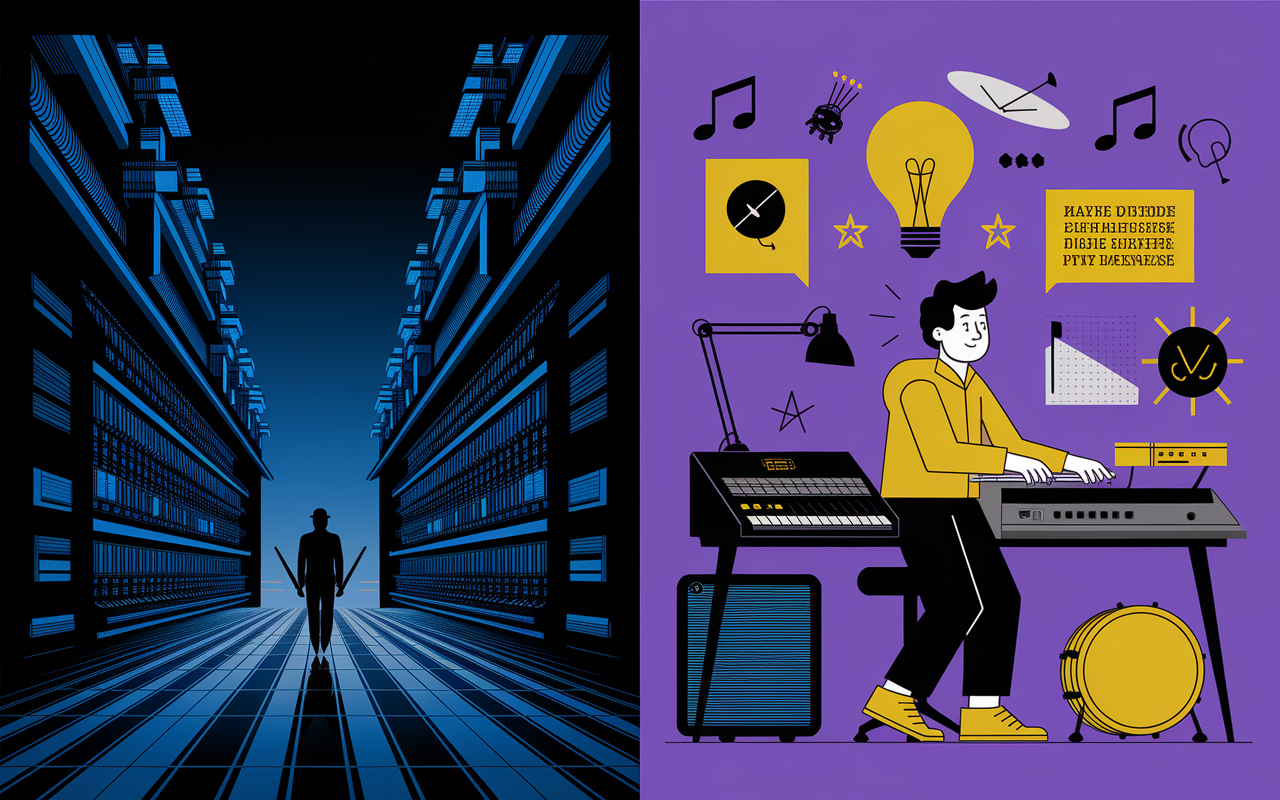
The music producer profession unfolds in a market of variable geometry. Majors and independents don’t play in the same league, and the distribution of forces deeply shapes musical diversity, a point regularly raised at professional forums.
At major labels (Universal, Sony, Warner), producers benefit from considerable resources: state-of-the-art equipment, dedicated teams, dense international networks. Conversely, independents stand out through their more artisanal approach, generally flexible and inventive, but with limited resources and the necessity to constantly innovate to exist.
It’s regularly observed that majors’ market share amounts to approximately 70–80% of global sales, while independents remain drivers of diversity and genre experimentation. According to Fedelima, the independent fabric embodies a true “showcase of experimentation,” provided everyone can evolve with the sector’s new tools and constraints.
Illustrated comparison: strengths and weaknesses
Here are some concrete benchmarks to better discern the differences:
- Majors have privileged access to media, an extensive promotional network, and substantial budgets; in return, pressure on profitability remains very high.
- Independents favor greater flexibility in their choices, a more affirmed artistic identity; however, they must ensure distribution and regularly juggle multiple roles simultaneously.
- Majors frame the profession with precise contracts, royalty management, and teams, while independents willingly test new business models.
- There’s sometimes mention of the risk of sound uniformization during sector consolidations, while independents push for integration of emerging trends.
Some remember this anecdote: an independent producer launched a “sleeper hit” on a streaming platform, practically without traditional promotion, thus proving that agility can also set an example. Favor freedom or structured framework? It’s a question that continues to fuel exchanges between experts: sometimes in festival backstages or during “off” meetings.
Techniques and innovations
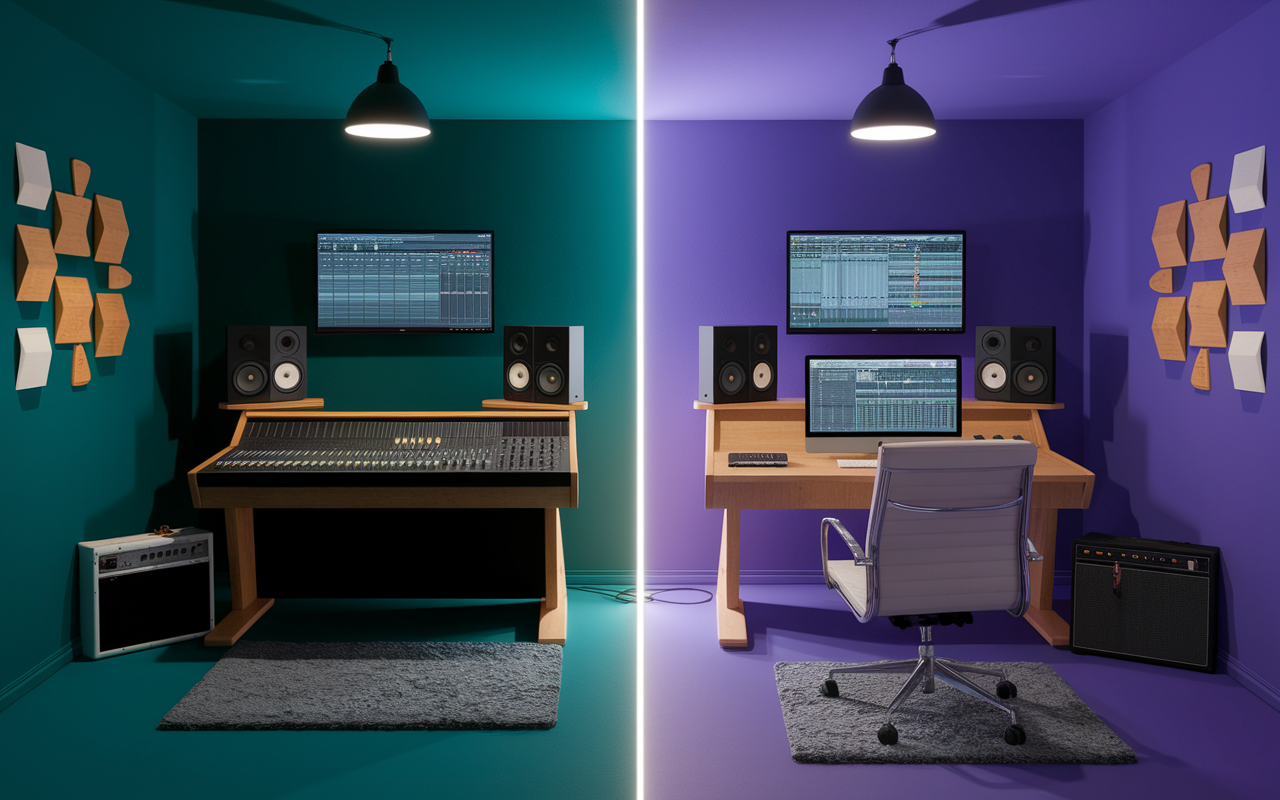
Studios have changed face: the emergence of artificial intelligence radically modifies processes, while digital tools open unprecedented perspectives for all profiles. Is it a threat to the traditional profession, or a chance to invent new practices? Answers vary according to generations and schools of thought.
According to a CNM 2025 study, nearly 40% of French producers now use AI-based solutions: sound creation, automated mixing, predictive trend analysis. The emergence of services like Suno, or Spotify’s algorithms, generalizes machine learning integration in studios. However, many experts continue to affirm that the uniqueness of human creativity remains essential for developing an authentic sonic identity. An instructor recently noted that the “sanitization” of sound by AI intrigues as much as it worries.
It should be noted that historical techniques such as the Wall of Sound or multitrack production remain pillars, but now combine with innovations: AI mastering, remote collaborations, video conference sessions, etc.
Overview of tools and recent developments
- DAWs (Digital Audio Workstation: Ableton, Logic, FL Studio) still constitute the foundation, recently enriched by adding AI plugins for mixing or composition.
- Remote collaboration is becoming the norm (Zoom, Jamulus), offering some producers the ability to set up international projects without leaving their studio.
- Among hybrid studios, combining analog and digital, a marked rise is observed, particularly in major cities or among pioneering independents.
- Rapid experimentation is taking hold: immediate access to sample banks and generative loop algorithms, allowing for “manufacturing” a custom sonic identity.
According to several feedbacks collected at seminars, AI allows exploring new musical territories, but everyone retains the responsibility to define their own approach and preserve traditional know-how. It’s not uncommon for a first try with a digital tool to lead teams to completely reinvent their production method – sometimes under the amused gaze of a seasoned professional.
Good to Know
I recommend testing digital tools and AI with discernment, because even though these innovations offer new possibilities, it’s your personal approach that will make all the difference in music production.
Success stories and iconic portraits
Behind each influential producer, a story unfolds: passion, risk-taking, decisive encounters. Anecdotes regularly circulate: a producer’s sonic signature radically changes the destiny of an artist, a group, or even an entire musical style.
A few figures give an idea of music production’s influence: Brian Eno produced or co-produced more than 40 albums in six different styles; Dr. Dre, multiple Grammy winner, is associated with the birth of West Coast Hip-Hop; Phil Spector, for his part, left his mark on 25 tracks in the Top 40 in less than six years. For perspective, Thriller’s success under Quincy Jones‘ guidance remains unmatched: 66 million albums sold – enough to inspire generations of producers that follow.
Express portraits and studio anecdotes
- Quincy Jones: refined orchestration, mentor role alongside Michael Jackson – some American studios cite him as an example for his pedagogy during recording sessions.
- Butch Vig: from alternative rock to electro, a “hands-on” production with Garbage – he recounts having preferred to stay in modest studios to better capture the group’s spirit.
- Brian Eno: ambient pioneer, collaborations with David Bowie and U2, constant sound research – he often mentions the “spontaneous alchemy” during sessions.
- Dr. Dre: advances in hip-hop mixing, talent management of rising stars like Eminem – it’s said he systematically encourages young artists to invent their own style.
It should be emphasized that innovation doesn’t depend on equipment or location: some professionals report that their finest discoveries emerged in “old-school” studios. Many producers insist on a studio anecdote – sometimes a handling error, often an intuition – that eventually becomes the hallmark of a project.
FAQ and practical guide
Faced with sector developments, many questions arise, both among aspiring and seasoned professionals. In this spirit, here’s a synthetic overview to see things more clearly.
Recurring questions… and some concrete leads
Who is a music producer?
They’re the technical and creative conductor, guiding all stages, from talent spotting to final mixing.
What are the differences between major and independent?
A major: international structure and powerful resources. An independent: craftsman work, local agility, generally more freedom.
Will AI replace human producers?
That’s not on the agenda: automation of technical tasks, new creative models – but human feeling remains unique and difficult to reproduce.
How to get started?
Self-train or attend school, test DAWs (Ableton, Logic), participate in masterclasses or studio sessions, immerse yourself in the local network.
Producers and streaming?
Online monetization management also enters the profession: optimizing releases, audience analysis, and royalty management on major platforms.
A piece of advice often given by professionals: take time to explore specialized technical files (Fedelima, CNM), download a guide, or watch producer interviews. This type of resource sometimes makes the difference in clarifying one’s path – nothing rules out that some testify to having discovered their vocation this way, via a simple discovery video watched late at night.
Additional resources and directories to follow
It’s relatively often recommended to complement your monitoring with producer playlists on Spotify, “AI & Music” files on CNM, or specialized directories for labels and studios. Many young producers grew up building their network on dedicated forums (Audiofanzine, Reddit music) – an approach that, according to some instructors, deserves to be more valued in the sector.
Opening – opportunities and future developments
The role of music producer in 2026 is constantly reinventing itself: diversification of professions, rise of online creation, importance of streaming and data. Competition is intensifying – some even mention the acceleration of recruitment rhythms – but it’s observed that tools and resources are more accessible than ever, for all types. It’s up to each profile to seize these opportunities to continue innovating, while preserving musical richness and project originality.
It remains crucial to remember that a music producer isn’t just a name on a cover: they’re sometimes atypical personalities who leave a lasting mark on the history of sound (as recounted by an engineer who crossed paths with Brian Eno in a London studio). Final point to note: each producer’s trajectory is invented through encounters and experiments, much more than through a recipe set in stone.