
Adopting a cutting breakfast that actually works is primarily about finding the right balance between proteins, complex carbohydrates, fiber, and healthy fats. This morning start, when well thought out, prevents cravings and energy crashes while supporting muscle mass. Faced with a flood of sometimes contradictory recommendations, it’s better to adapt your intake based on your goals, physical activity, and preferences, turning each morning into an energizing and enjoyable moment.
Summary of Key Points
- A cutting breakfast combines proteins, fiber, complex carbs, and healthy fats.
- Dedicating about 20% of daily calories to breakfast helps stabilize blood sugar.
- Quick recipes and simple ingredients allow for an energizing and adaptable start.
Cutting Breakfast: The Quick Answer to Key Needs
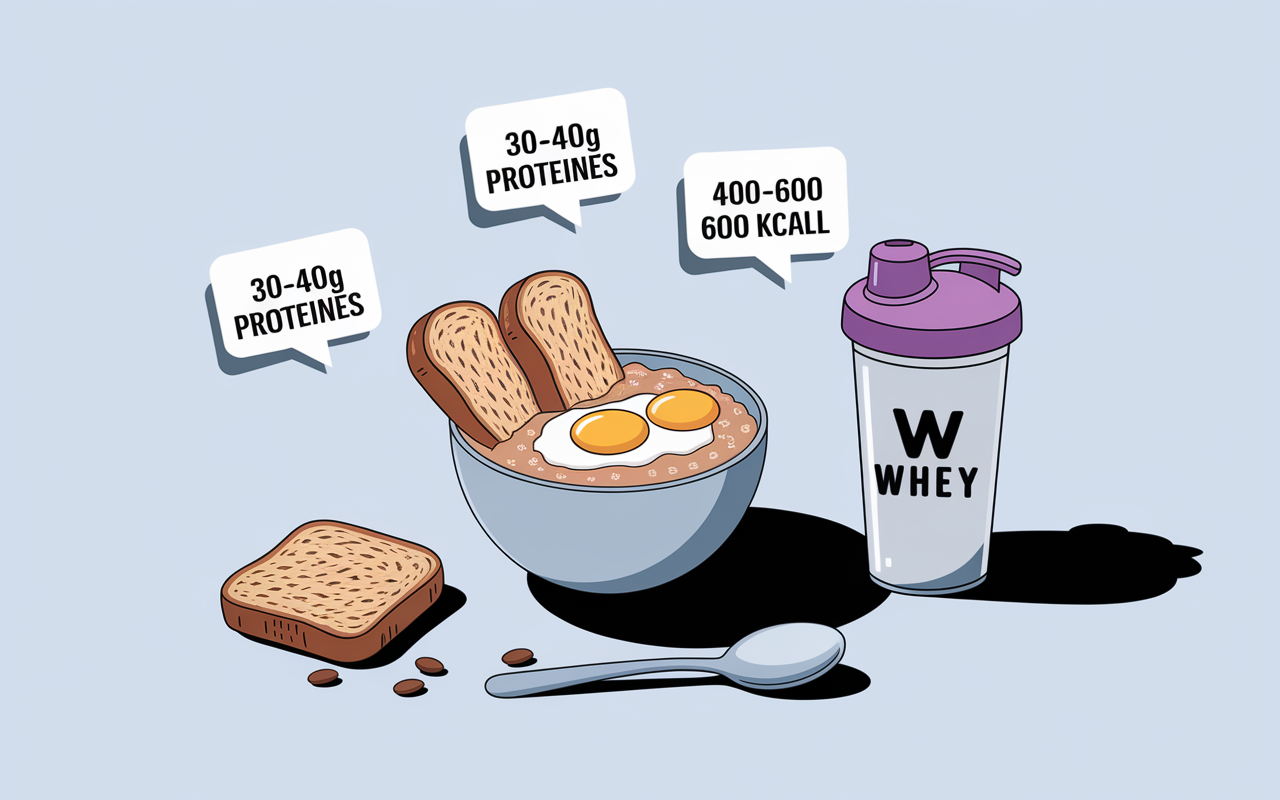
During a cutting phase, breakfast relies on a precise combination: quality proteins, filling fiber, well-measured complex carbohydrates, and some unsaturated fats. Eggs, cottage cheese or whey, oatmeal or whole wheat bread, some nuts or avocado are solid choices, while fast sugars (commercial juices, processed cereals) should be limited. Generally, it’s recommended to dedicate 20% of daily caloric intake (roughly 400 to 600 kcal for an adult), with 30 to 40g of protein, to maintain muscle mass and manage hunger effectively.
Quick recipes? For example, protein porridge, complete omelet, oat pancakes, or yogurt-muesli parfait come together in just a few minutes. The choice depends on motivation or the day’s training level: this way, your breakfast can become support, not a constraint! A nutritionist recently emphasized that enjoyment at the table is also essential…
Why Optimize Breakfast During Cutting?
At this point in the program, every morning plays a key role. An inappropriate breakfast risks undermining the previous day’s work. During cutting, early hunger and late-morning exhaustion are common: that’s where first meal quality becomes crucial.
In practice, dedicating 20% of daily calories to breakfast (around 400 to 600 kcal depending on needs) helps stabilize blood sugar, limits muscle breakdown, and starts the morning on the right foot (source – Square Gym, ANSES).
Satiety, Energy, and Muscle Preservation
As a priority, favor easily digestible proteins (30 to 40g per meal) to support muscle mass and prevent hunger. Fiber slows digestion and contributes to lasting satiety. Additionally, choosing complex carbohydrates reduces blood sugar fluctuations and the famous 10 AM crash.
Keep in mind: a morning without cravings or fatigue starts with a breakfast balanced in macronutrients, neither too heavy nor too light – adjusting to your routine remains key. A sports coach recently shared: his ideal breakfast is one that protects him from snacking until noon… a sign he’s on the right track.
Maintaining Hormonal and Athletic Balance
Unsaturated fats (like avocado or nuts) play a role in hormonal balance, which promotes performance and recovery. However, some choices (refined cereals, commercial juices) expose you to the infamous craving or, worse, muscle loss.
Specifically, during a cutting phase, alternating a substantial breakfast with protein snacks (up to 5 or 6 meals per day) helps better manage hunger and protects the body without exceeding calories.
Good to Know
I recommend alternating a substantial breakfast with protein snacks to better manage hunger and support muscle mass during cutting.
Nutritional Fundamentals for a Cutting Breakfast
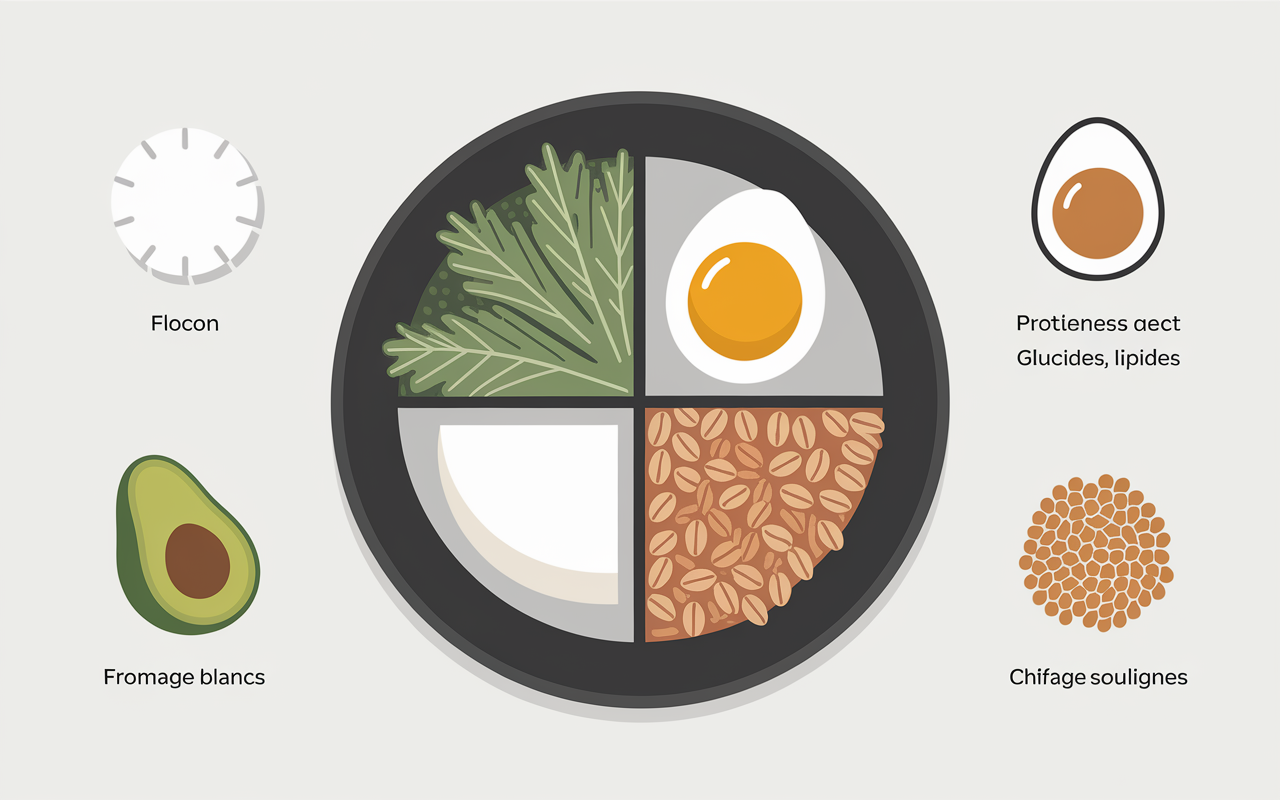
A breakfast that effectively supports cutting relies on thoughtful macronutrient dosing. Forget overly strict approaches like “zero carbs” or “all low-fat”! The goal – preserve muscle, ensure sufficient energy, and maintain eating pleasure without frustration.
Ideal Macro and Calorie Distribution
What works for many:
- Set protein intake between 30 to 40g (whey, eggs, cottage cheese, firm tofu…)
- Opt for 25 to 35g of complex carbohydrates (oats, whole wheat bread, sweet potato, quinoa…)
- Ideally include 10 to 15g of healthy fats (chia seeds, nuts, avocado…)
Here are some reference points: 50g of oatmeal contains 190 kcal and 7g of protein; one whole egg, 70 kcal and 6g of protein; 30g of whey provides 120 kcal and 24g of protein. Aiming for a range of 400 to 600 kcal often seems reasonable as a starting point (info from Chef Costaud).
Examples of Winning Combinations
Combining a protein source, a slow-release carbohydrate, and a portion of fiber/fats remains the preferred strategy for cutting breakfasts. Why not try cottage cheese, oatmeal, berries, and some nuts? Or a veggie omelet with a slice of whole wheat bread? These meal templates satisfy both body and mind… and many athletes confirm this after a few weeks.
Quick and Varied Recipes for Cutting
In the morning, time can be short. Yet five minutes is plenty to create an effective and adaptable breakfast depending on mood, schedule, or fatigue. Surprisingly, indulgence sometimes makes the rigor of cutting easier to handle!
Protein Porridge with Whey or Cottage Cheese
In a bowl: 50g oatmeal (190 kcal, 7g protein), 200ml plant milk, 30g whey (120 kcal, 24g protein). Add some berries and a spoonful of chia seeds, mix and microwave for two minutes. The result: quick, nourishing porridge. Values: approximately 320 kcal, 28g protein, 36g carbs, 7g fat.
Some claim it helped them avoid any cravings before lunch – the kind of detail that changes everything during a photoshoot or busy morning.
Quick Veggie Omelet with Whole Wheat Bread
Beat two whole eggs and two egg whites (170 kcal, 18g protein), add some diced bell pepper or spinach. Cook in a non-stick pan and serve with a slice of whole wheat bread (40g, 85 kcal, 2g protein). For macros: 255 kcal, 20g protein, 16g carbs, 9g fat. By varying the recipe (a touch of paprika or turmeric), anti-inflammatory and taste benefits add up, as confirmed by a sports dietitian.
Oat and Cottage Cheese Pancakes
Mix 40g oatmeal, 100g cottage cheese, one egg, a natural sweetener, then cook in a pan (two to three minutes per side). On tasting: approximately 260 kcal, 20g protein, 30g carbs, 6g fat. Many report that batter made the night before gives better texture and saves time in the morning… a tip validated after numerous tests.
Yogurt-Muesli Parfait with Seeds
In a glass, layer 150g plain yogurt (90 kcal, 7g protein), 40g unsweetened muesli (130 kcal, 4g protein), some berries and nuts, sprinkle with flax seeds and cinnamon. Values per serving: 220 kcal, 12g protein, 25g carbs, 7g fat. Some kids enjoy this “colorful” version on exam mornings, as do athletes after light training.
Vegetarian Option: Scrambled Tofu with Whole Wheat Bread
Crumble 100g firm tofu (120 kcal, 13g protein), saut in a little olive oil with turmeric, salt, and pepper. Serve with 40g whole wheat bread. Values: 205 kcal, 15g protein, 16g carbs, 8g fat. Toppings change with seasonal vegetables (tomato, bell pepper, asparagus…). It’s a “custom” plate based on the day’s inspiration or training level.
Common Mistakes to Avoid and Useful Adjustments
Should you completely eliminate sugar in the morning? This advice is everywhere, but in practice, it’s more about quantity and type that matter. The main pitfall remains excess fast sugars not combined with proteins or fiber, which accelerates blood sugar spikes. What makes the difference is balance – everything else is just variation.
Hidden Sugars, Poor Timing, and Lack of Fiber
Common traps are often as follows:
- Skipping breakfast out of fear of calories (“With fasting, I held out two days… before caving to cookies!”)
- Excessive consumption of fruits, juice, or commercial cereals that spike blood sugar
- Lack of proteins, to the detriment of muscle and satiety
- Deficiency in fiber and quality fats (nuts, seeds especially)
These missteps relatively often lead to the “11 AM craving” or increase the sometimes insidious risk of muscle loss.
Adjusting Portions and Cooking Based on Fitness Level
For beginners, simple recipes and reasonable portions are better. More experienced athletes can increase protein intake (up to 40g), modify sources, or add vegetables for more volume without excess calories. A simple way to orient yourself: Assess your hunger between breakfast and lunch then adjust through trial and error. Besides, many followers report swapping their pastry for an omelet – morning motivation really improves! Is this option feasible for everyone? It seems possible, but personalized monitoring is recommended.
Customization, FAQ, and Resources to Go Further
While fundamentals don’t change, adjusting breakfast according to tastes, allergies, workout rhythm, or season quickly becomes useful – everyone has their own particularity! Don’t feel guilty if a vegetarian variation, advance meal prep, or even a changing menu appeals more than a rigid plan.
Summary Table – Three Concrete Examples
| Recipe | Calories | Protein | Carbs | Fat |
|---|---|---|---|---|
| Protein Porridge | 320 | 28g | 36g | 7g |
| Whole Wheat Bread Omelet | 255 | 20g | 16g | 9g |
| Oat Cottage Cheese Pancakes | 260 | 20g | 30g | 6g |
If you want to go further or receive a personalized menu, try the online simulator, join a premium program, or browse the FAQ guides to fine-tune your cutting breakfast.
FAQ – Frequently Asked Questions
- What foods should absolutely be avoided? Fruit juices, refined cereals, pastries, overly sweet jams – better to prefer oats, whole wheat bread, and whole fruits.
- How many calories should a cutting breakfast have? Between 400 and 600 kcal, which corresponds to 20% of the daily intake generally.
- Is a vegetarian or vegan breakfast possible? Yes, thanks to tofu, tempeh, plant proteins, seeds, and alternative milks.
- How to vary without affecting the deficit? Change up spices, vegetables, protein sources – but keep the basic structure.
- Is eating in the morning mandatory? It’s not required, but in some cases it’s recommended to protect muscles and maintain stable energy; adapt based on your feelings and constraints.
Perhaps in time, you too will share your before/after following a cutting morning routine? This morning meal is the first step… toward your next goal!
To Go Further: Advanced Guides, Sign-ups, and Menu Simulators
- See the complete Square Gym guide
- Recipes and testimonials on Chef Costaud
- Optimize morning nutrition on Les Calories Blog
- Create my free personalized menu
Feel free to enrich the discussion with your tips, recipes, or questions in the comments: the cutting morning routine is also built through exchange and feedback!