The whole appeal of chamber music lies in its spirit of exchange and intimate format: each musician holds a unique place, and the constant dialogue between instruments invites active listening, far from the solemnity of a traditional orchestra. To better appreciate the richness of this genre, it is often recommended to explore its history, recognize the diversity of its formations, and follow the evolution of its practices – accessibility and conviviality are now essential pillars, both on stage and in learning or family discoveries (this is even what attracts new audiences each year).
Chamber music: an intimate genre, defined simply
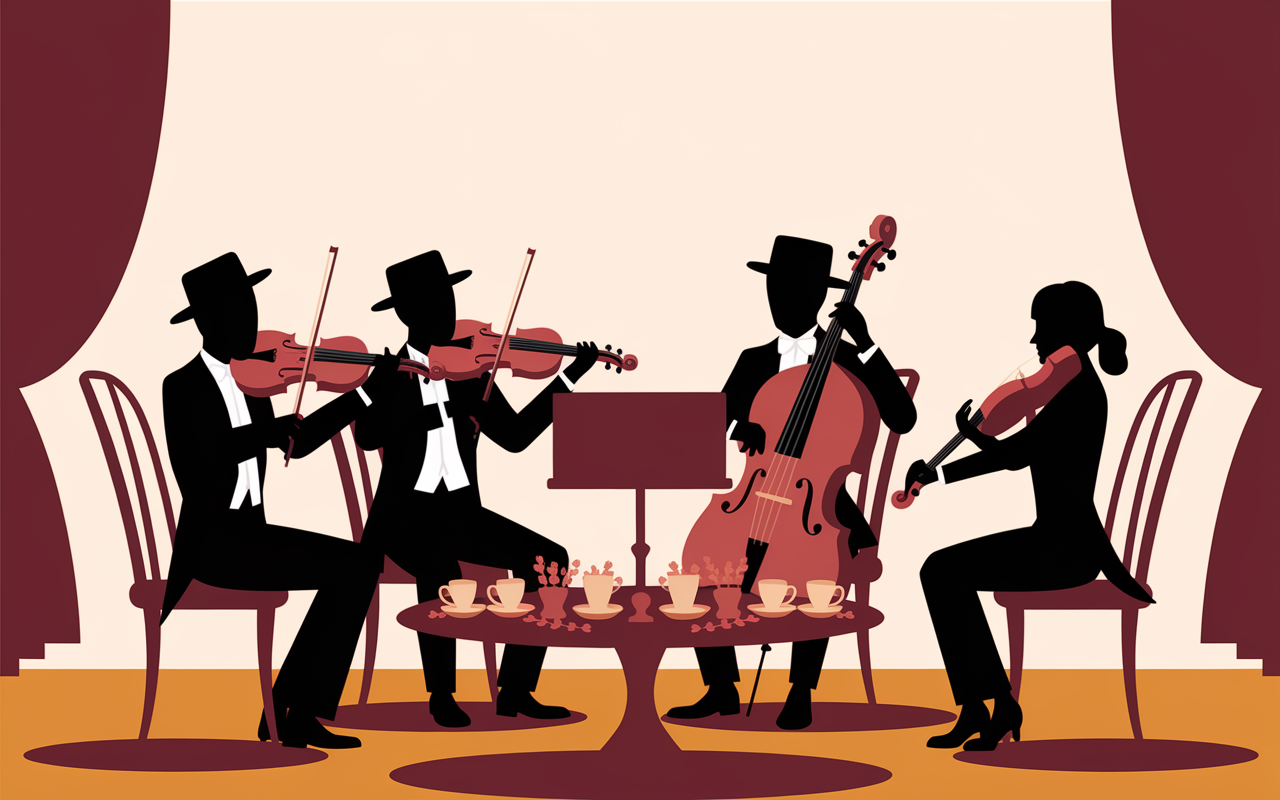
What we call chamber music is above all the art of the “small format”: from two to ten musicians only, each playing a distinct part and everyone functioning in exchange without a conductor. Some even evoke the atmosphere of a warm salon where instruments respond to each other, like a conversation around a table – this spirit was born in the 17th century, in aristocratic salons, and resonates today in intimate venues as well as on streaming platforms.
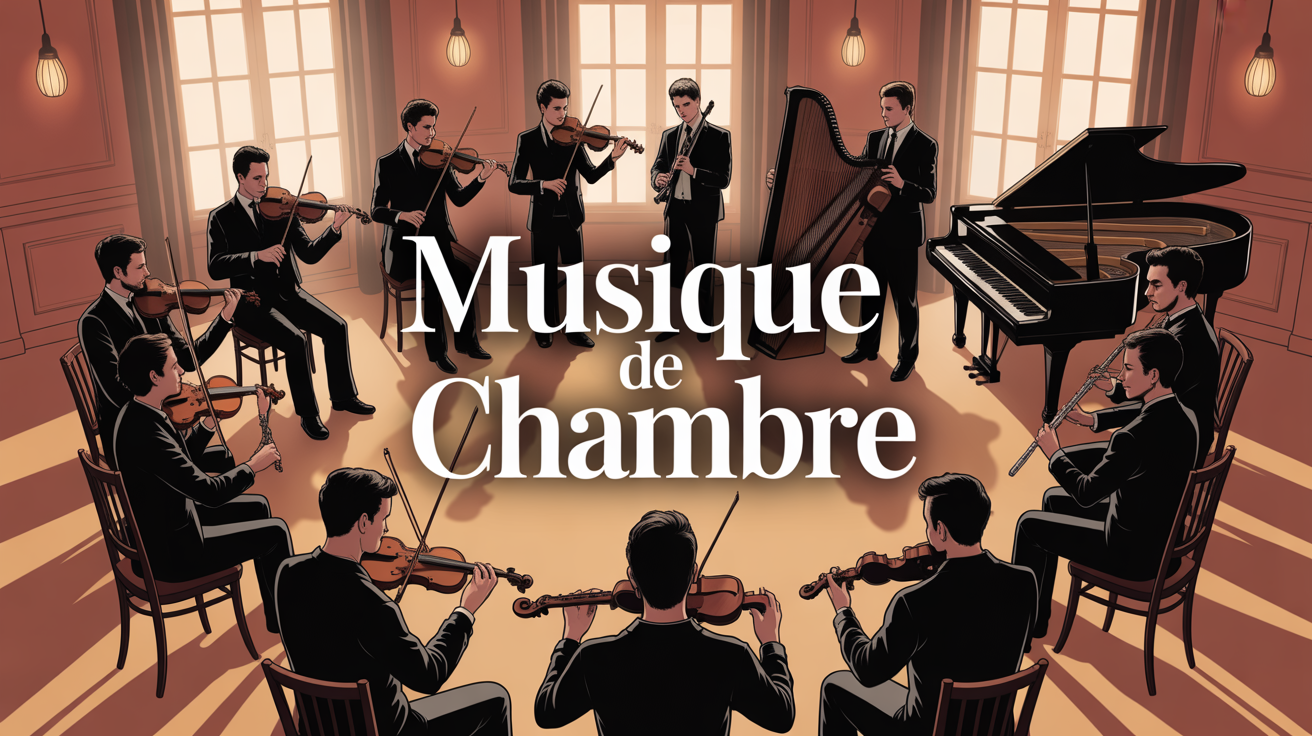
In practice, this genre is distinguished by the modest size of its groups: we encounter a piano-violin duo, a string trio, the famous quartet (with two violins, viola, cello)… and sometimes a rare dectet. Each musician plays the role of soloist, carrying a distinct “voice,” and the audience enjoys the sonic refinement and true artistic proximity. While the symphony orchestra impresses with its power, chamber music remains the domain of nuances, cooperation, and shared creativity – musicians sometimes tell backstage stories about how the individual responsibility pushes each person to excel.
Another point to note – chamber music today claims both a pedagogical and convivial vocation, with more than twenty musicians gathering per season at major festivals and a growing podcast offering (8 episodes listed on France Musique, for example).
The difference from the symphony orchestra: a matter of dialogue
Are you wondering what really distinguishes chamber music from orchestral ensembles? It is often noted that the absence of a conductor and the dynamic of “dialogue” between participants make all the difference. While symphony orchestras (more than 30 instrumentalists) aim for unison under a conductor’s leadership, chamber music favors individual initiative and requires attentive listening. This result, often more personal, can be heard in concerts where musical conversations are clearly perceptible.
As an example, imagine the delicacy of a string quartet (4 musicians) compared to the power of a Beethoven symphony – one offers a subtle conversation, while the other relies on collective grandeur. A teacher recently mentioned how much this distinction influences the audience’s perception.
Baroque origins, classical peak, and modern renewal: a chronological journey
Did you know that chamber music first took root in Italian palaces before conquering salons throughout Europe? Over the centuries, the genre has followed a path blending aristocratic traditions and a desire for renewal, crossing baroque, classicism, romanticism, and contemporary adventures (some professors recount that oral transmission, particularly in the 18th century, played its role in this evolution).
The first “trio sonatas” emerged with Corelli and Monteverdi, around 1650 – violin, cello, and harpsichord already sketched this refined exchange. In the following century, Haydn and Mozart laid the foundations of the string quartet; Beethoven, Schubert, and Mendelssohn expanded the palette toward romanticism with a great diversity of emotions. Dvořák and Brahms drew from the colors of quintets, and the 20th century opened the door to modern composers: Debussy, Bartók, Ravel, among others.
One last point to note: nowadays, specialized festivals organize an average of 8 editions since 2019, a testament to renewed and living interest.
Essential composers, from baroque to contemporary
For the curious who want to have a few names ready for a discussion, here are the main reference points:
- Corelli, Bach, Vivaldi are among the baroque references (for their invention of trio sonatas and suites that are absolutely worth listening to)
- Haydn, Mozart, Beethoven stand out in the classical period, with quartets and trios that have become essential works
- Schubert, Brahms, Dvořák, Mendelssohn shine with romantic quintets and sextets, each with their own tonality
- Ravel, Debussy, Bartók, Shostakovich, Ligeti embody the taste for experimentation in the 20th century (scores worth exploring, even for non-initiates)
Some professionals note that this selection already provides solid reference points for entering the world of chamber music. And if you come across an audience member at the end of a concert who mentions Schubert or Ligeti, it is relatively common.
Formations and instruments: from duo to dectet, an intimate palette
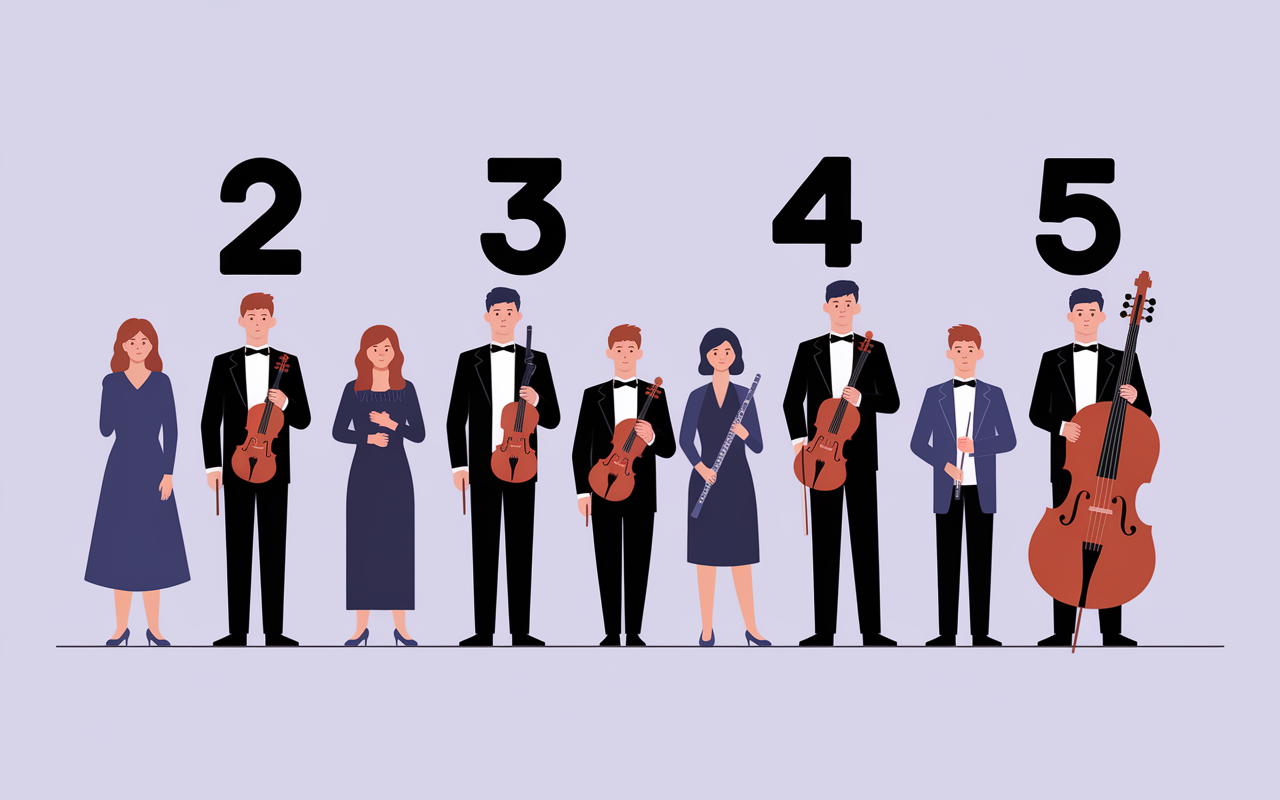
What are the usual configurations? Delving into the diversity in this area also means better understanding the chemistry at play within each musical group.
- In duos, we often hear piano-violin, flute-guitar, or sometimes voice-instrument combinations (experienced by some amateurs at small neighborhood concerts)
- Trios regularly mix piano and strings, but can also bring together winds and strings to vary the atmosphere
- The famous string quartet brings together two violins, a viola, and a cello – the quintessential formation, celebrated by entire festivals
- The wind quintet (flute, oboe, clarinet, horn, bassoon) offers another palette, often praised by teachers for its listening complexity
- As for sextets, octets, or dectets, they illustrate contemporary exploration, where one sometimes encounters piano, harp, or voice
It is observed that each grouping emphasizes rich polyphony and collective listening, without external direction. This is actually the ideal pathway for learning to communicate “musically” among peers (several conservatories make it an essential component of their pedagogy).
Generally, a chamber music concert lasts between 1.5 and 2.5 hours, offering complete immersion and moments of exchange during intermission – a format often appreciated by families (“it’s not always easy to stay focused longer,” joked a spectator one day).
The pedagogical and community role of ensembles
Let us add that amateur practice is developing strongly in France: workshops, masterclasses, and ensembles formed by students or adults occupy not only conservatories but also festivals and regional associations. This environment encourages learning nuance and mutual support. One regularly encounters groups rehearsing in a municipal hall or participating in local heritage events.
Would you like to join the adventure? Many associations offer positions to their volunteers or to musicians who are just beginning – each edition generally brings together more than twenty participants. Some festivals even tell stories of groups born from a simple collective workshop.
Essential works and first listens: how to get started?
Would you like to explore this genre a bit more closely? A few works immediately stand out for their charm and accessibility. To savor the magic, a first listen to Pachelbel’s Canon, Dvořák’s “American” quartet, or Brahms’ Quintet often proves revelatory.
- Canon in D major by Pachelbel, perfect for a gentle introduction to the basso continuo – some teachers use it to start workshops with children
- Quartet Op. 76 No. 3 “Emperor” (Haydn) or Op. 96 “American” (Dvořák) – two examples of classical virtuosity often considered popular at school auditions
- Elegiac Trio No. 1 (Rachmaninoff), Piano Quintet (Brahms, Schumann) – these works regularly mark the first amateur concerts
- Quintet in F major (Ravel), an illustration of the modern register praised by many experts
One can assume there is a wide choice, but these pieces already embody the conviviality and refinement of the genre. Several listeners report having been moved during their first discovery of Pachelbel’s Canon in a hall or through streaming – indeed, it remains a popular entry point.
Experiencing chamber music: concerts, festivals, and engagement
Access to this type of music has never been so direct. Festivals, institutions such as the Philharmonie de Paris, music houses, or private salons multiply their programs and foster a varied and inclusive experience. Promoting chamber music also means highlighting the venues: from baroque castles to contemporary studios, each edition generally reveals a new facet (some artists readily share the unique atmosphere of a concert given in a heritage setting).
For reference, France currently has at least 8 major festivals and a large number of concerts streamed online, with an average of more than 20 musicians per event. The typical duration remains between 1.5 and 2.5 hours, allowing family or beginner audiences to enjoy without feeling overwhelmed. Is this really what explains the growing attendance? One might believe so.
Participating, listening, or supporting: a practical guide
Would you like to go further in the experience? A few practical tips deserve your attention:
- Check local or national programming online (Fnac, Philharmonie, Baroqueries, to name the most visible)
- Listen to podcasts, join a workshop, or participate in a masterclass – each season, new amateur ensembles welcome volunteers or budding musicians
- Becoming a patron or volunteer: a viable option for contributing to the cultural life of a festival or concert
It is noted that the community grows with each edition: the number of participants and listeners increases significantly, reflecting a real democratization according to programmer testimonials.
FAQ – quick answers to your key questions
Here are a handful of useful reference points to easily navigate chamber music:
- Chamber music or orchestra? The former involves small groups without a conductor; the latter gathers a large ensemble guided by external direction.
- String quartet, what does that mean? Two violins, a viola, a cello: the emblematic formation, often cited for its richness and polyphony.
- Essential baroque composers? Corelli, Bach, Vivaldi, Monteverdi, all inventors of new forms (sonatas, suites) found in concerts and pedagogical literature.
- Does amateur practice really exist? Yes, as many ensembles and festivals promote the collective, including through workshops or volunteer activities each year.
- Where to listen in France? Philharmonie de Paris, Lyon Opera, local festivals, concerts streamed or podcasts – at least 8 editions or major events are recorded per year.
It is noted that chamber music is by no means reserved for a few initiates: it invites everyone to try the experience, at home or in a concert hall, as long as one has the curiosity to listen… Even experts remind us that the first listen can be surprising!
To go further – recommended resources
It is worth extending the exploration of the genre through these resources:
- Complete Wikipedia article – a good starting point to browse definitions and major movements
- Baroqueries: baroque history and listening – useful for discovering the roots of musical intimacy
- Fnac guide to works and styles – practical reference points and work selections to listen to
- France Musique podcasts (8 dedicated episodes) – rich support for getting started or going deeper
- Spotify or Apple Music playlists (search “string quartet,” “chamber music” for multiple tracks to explore with friends or family)