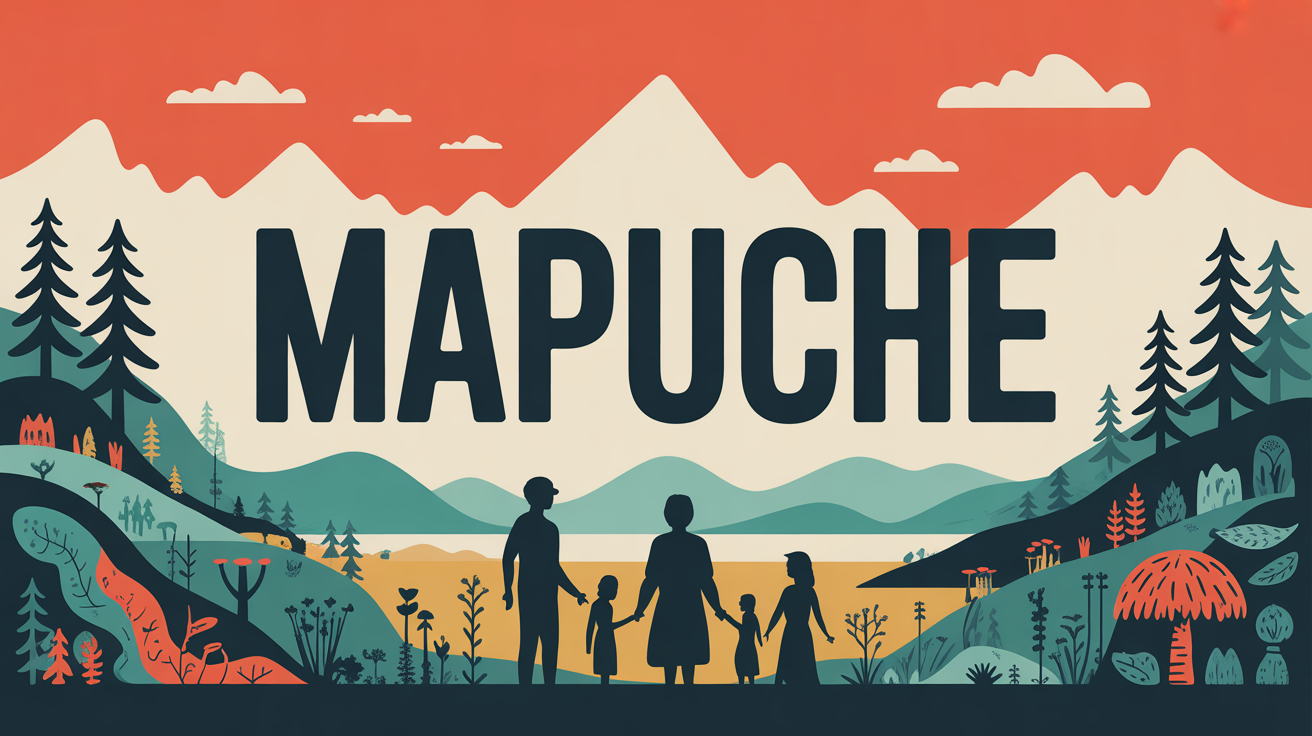
Telling the story and challenges of the Mapuche people means allowing a unique identity, regularly overlooked, to exist in the open—deeply tied to the land, to cultural diversity, and to the living transmission of the Mapudungun language. Tracing their journeys also invites reflection on the meaning of resistance, paths toward recognition, and contemporary issues, far from the usual cliches.
Key Points Summary
- Mapuche identity is deeply tied to the land and the Mapudungun language
- Their history is marked by strong resistance to colonization
- Their current demands focus on territorial restitution and cultural recognition
Definition – Who are the Mapuche?
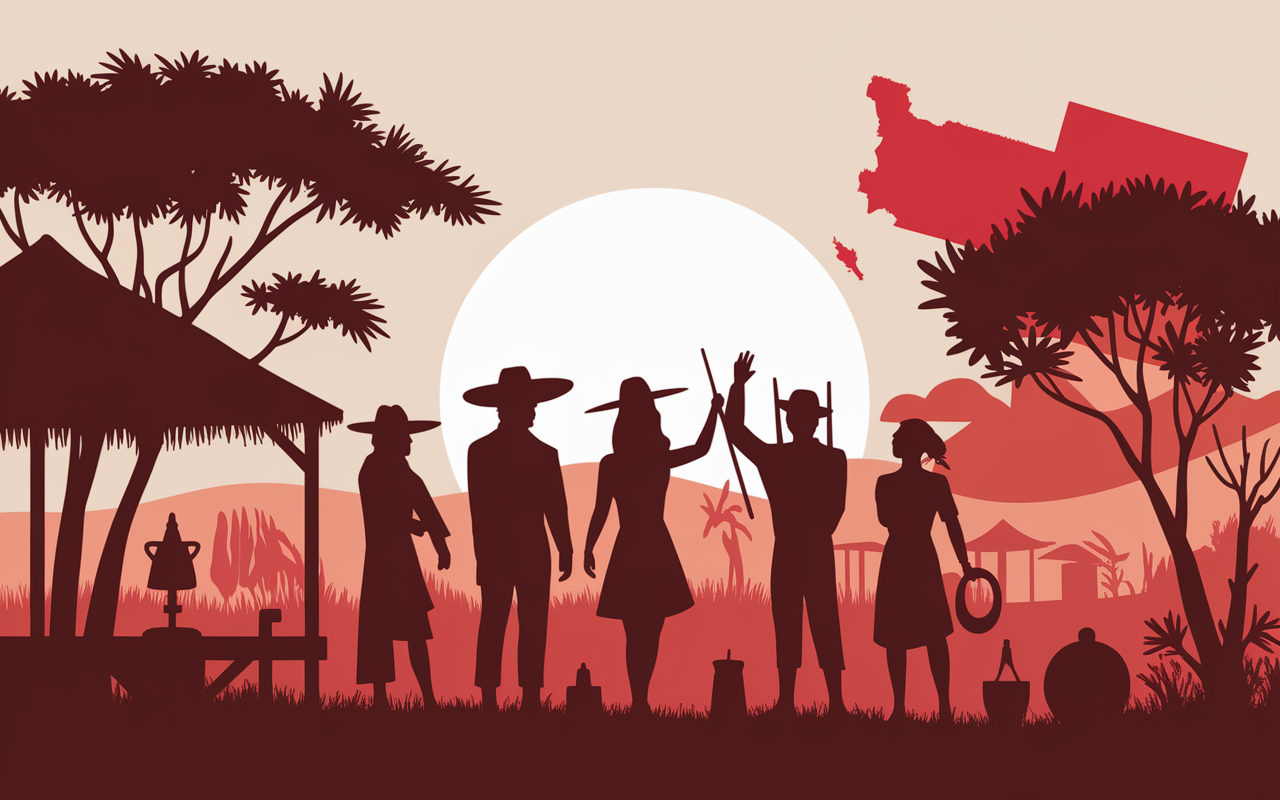
The Mapuche themselves choose the name “people of the land.” This Indigenous people, though major in the region, often remains unknown in the collective imagination. They primarily inhabit southern Chile and southwestern Argentina, where their identity rests on a very intimate bond with nature, transmitted in Mapudungun.
The word Mapuche derives from Mapudungun: mapu (“land”) and che (“people”), reflecting a worldview centered on respect for the living and for community. It’s useful to note that “the Mapuche people” (composed of men and women, a culture and a territory) is distinct from the Mapudungun language itself, which survives even though it is marginalized.
Another point: the term “Mapuche” increasingly replaces the old “Araucanian,” a label given by Spanish colonizers loaded with inaccurate stereotypes. No direct connection exists with the Maya or the Inca, although the Mapuche valiantly resisted the latter and then the Spanish.
Concretely, their language is considered a linguistic isolate: it is not related to any other known language family—making it a precious rarity in the contemporary world. Some linguists emphasize that very few languages share this singular status.
Where do the Mapuche live?
It’s impossible to discuss the Mapuche without mentioning Wallmapu, their homeland, now divided between Chile and Argentina.
The main communities are found:
- On the Chilean side, in Araucania and further south: Temuco appears to remain the most vibrant cultural center
- In Argentina, mainly in Patagonia and in provinces like Neuquen, Rio Negro, or Chubut
Figures show that approximately 1.5 million individuals identify as Mapuche, including nearly 400,000 in Chile according to the latest official surveys. About 258,000 people still speak Mapudungun. This number stands out: it represents one of the most notable demographic vitalities among Indigenous peoples of South America.
Thus, while many Amerindian languages are being lost, Mapuche dynamism is manifested through the creation of bilingual schools and local radio stations. Just imagine: listening to a radio show in Mapudungun offers an authentic glimpse of a culture that refuses to disappear. Some young people who grew up outside traditional neighborhoods describe their surprise when hearing these broadcasts: for them, it’s as much a sign of the future as a quiet tribute to the past.
The history of Mapuche resistance
From the first confrontations with the Inca to current struggles for their rights, the Mapuche journey demonstrates remarkable resilience.
A chronology of struggles
According to a Chilean educator, the Mapuche enter written history through their fierce resistance against the Inca, followed by collective mobilization against the Spanish starting in the mid-16th century. Their victory over the Inca empire remains a unique case in the continent’s history. A few legendary chiefs, like Lautaro or Caupolican, embody this fighting spirit.
However, the major upheaval occurred between 1879 and 1885: the “Conquest of the Desert” in Argentina and the “Pacification of Araucania” in Chile began an era of massive dispossession, stripping the Mapuche of nearly 70% of their historical territory. From sovereign populations, they became, within a few decades, a “minority” often excluded, called “Araucanians” in 19th-century European accounts.
Key milestones:
- Before 1540 – established presence on the Andean slopes, determined struggle against the Inca
- 1545-1883 – prolonged confrontation with the Spanish then with modern states, Chile and Argentina
- 1879-1885 – massive land loss (approximately 70%) during Chilean and Argentine military advances
- Since 1993 – first official statuses and rights in Chile, notable rise in identity affirmation
It is regularly noted that this history remains rarely shown in national education. Yet, before the 19th century, the Mapuche nation was among the rare South American peoples to have negotiated almost as equals with the Spanish Crown. Does this former autonomy persist in some current form? One can assume that a fierce attachment to collective memory remains, punctuated by deep wounds and ever-present pride.
Cultural and linguistic identity card
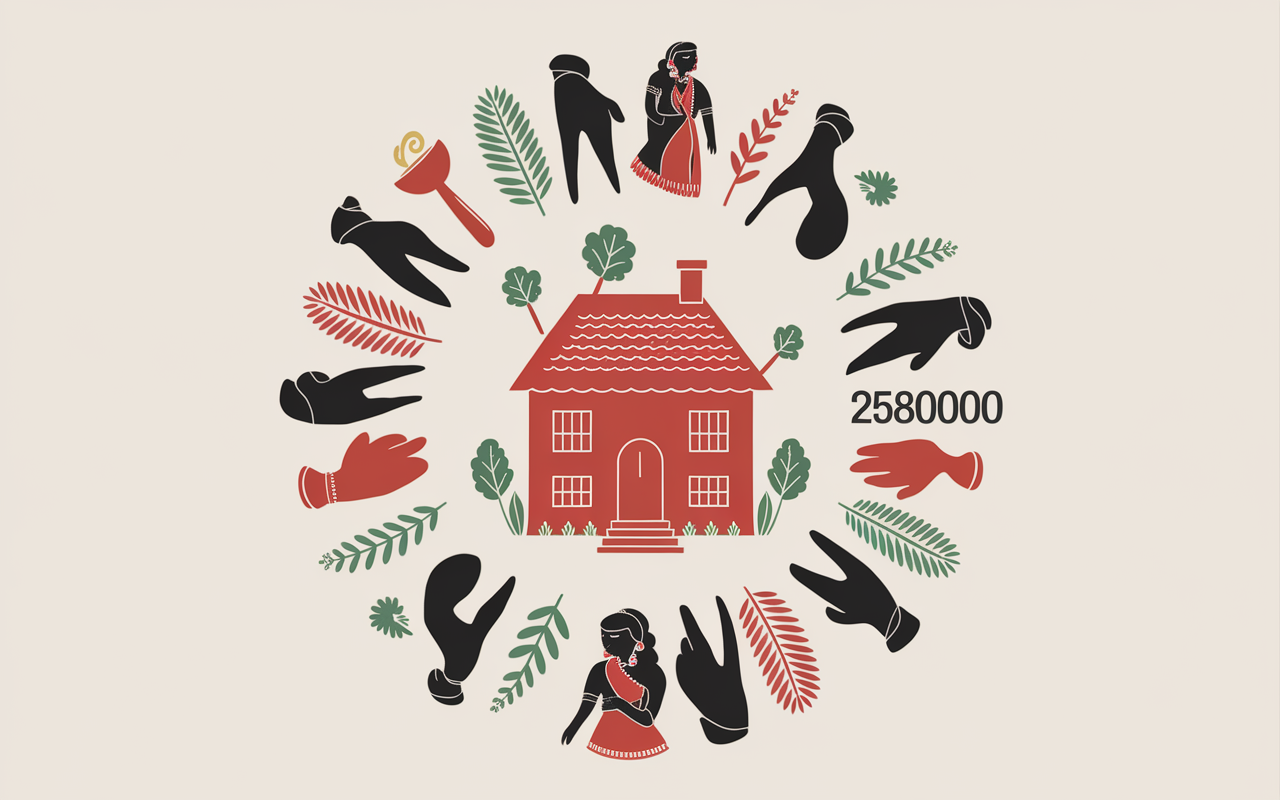
Where some see a distant memory, the Mapuche insist that their culture reinvents itself every day and never stops transforming.
Language and traditions
Mapudungun, practiced by approximately 258,000 speakers, unfolds a worldview difficult to translate, full of nuances and local subtleties. Among the aspects noted by anthropologists:
- The ruka, a collective thatched house, the heart of community living and central gathering place
- The machi, a shaman, usually female, guardian of knowledge encompassing spirituality and traditional medicine
- The Mapuche cosmovision, which places the relationship between humans, spirits, animals, and natural elements at the center of social functioning; incidentally, many Chilean environmental activists openly draw inspiration from this conception
During ngillatun ceremonies, every neighboring family gathers to celebrate the bond with the land. Songs, dances, and collective stories punctuate these important times. It sometimes happens that a foreign musician present at a ngillatun compares these moments to “word-of-mouth” transmission between generations, a living illustration of a tradition that never becomes fixed. Does all of this continue exactly as before? It’s not always clear, but the power of the ritual and shared emotion testify to the passing of memories.
Good to know
I recommend paying attention to ngillatun ceremonies, which embody the living transmission of Mapuche culture from one generation to the next.
Current Mapuche issues
Mapuche current events, sometimes mentioned in international news, are built between great hopes and persistent challenges.
Claims, ecology, and social innovations
Over recent decades, three paths have emerged as central to Mapuche struggles:
- Territorial claims, seeking to recover lands and obtain respect for old treaties
- Legal recognition, even though the Chilean Constitution remains silent on collective Mapuche status (despite the first official recognition in 1993)
- Current cultural effervescence, driven by educational momentum, the creation of alternative media, and youth mobilization in bilingual schools
Notable in recent events: some land conflicts remain intense, police interventions are frequent, but other signals show openness (such as the strengthening of Mapudungun teaching in 2023 or the growing visibility of “machi” women engaged in environmental causes). Interestingly, an expert associated with Chile’s Ministry of Culture believes that reference to Mapuche cosmovision serves as leverage in current ecological advocacy. Can global development and respect for Indigenous diversity be reconciled? The question fuels debates in Chile and Argentina, forcing nuanced answers.
Summary FAQ – Key points to remember
Who are the Mapuche and what does the name mean?
An Indigenous population established in south-central Chile and southwestern Argentina, “Mapuche” literally means “people of the land” in their native language.
How many people speak Mapudungun?
A handful of stages: approximately 258,000 speakers, mainly distributed between Chile and Argentina, continue to use Mapudungun daily.
Is there a connection between the Mapuche, Maya, or Inca?
Not directly: the Mapuche distinguished themselves by resisting both the Inca and the Spanish, without linguistic or cultural proximity to these peoples.
What are the major Mapuche demands?
They center on territorial restitution, formal recognition, and language preservation; Chile validated their existence in law in 1993, even though concrete progress on the ground remains limited.
Paths to dig deeper and explore further
- Detailed definition – Lalanguefrancaise.com
- Historical references and map – Wikipedia
- News and contemporary movements – Safariworld.fr
This summary offers reliable reference points, and the curiosity to discover more (for example about the role of the “machi,” the values of cosmovision, or recent resistance movements) remains open. If a particular subject intrigues you, it’s always possible to share it: sometimes, it’s in the multiplicity of perspectives that exchange takes on a new dimension.
Technical identity card (model inspired by top 5 editorial profiles)
| Element | Data |
|---|---|
| Mapuche Population | ~1.5 million |
| Mapudungun Speakers | ~258,000 |
| Territorial Loss in 19th Century | ~70% of Wallmapu |
| Legal Status | Recognition Chile, 1993 |
Share buttons: