Caught between sports enthusiasm and calls for medical caution, cryotherapy is increasingly attracting interest from bodybuilding enthusiasts seeking more effective recovery. Through this topic, we examine the real nuances – some tout its benefits, others highlight its sometimes limited accessibility or points of vigilance. It’s better to cross practitioner testimony, scientific data, and the realities of specialized centers to concretely understand what cold brings (or doesn’t) to muscle training.
Cryotherapy: A Proven Accelerator for Muscle Recovery?
Many in bodybuilding seek a quick trick to calm soreness, reduce fatigue, and better chain sessions together. Cryotherapy, made famous by professional athletes, is reputed to work in minutes. But what about its actual effectiveness? Does it live up to the testimonials?
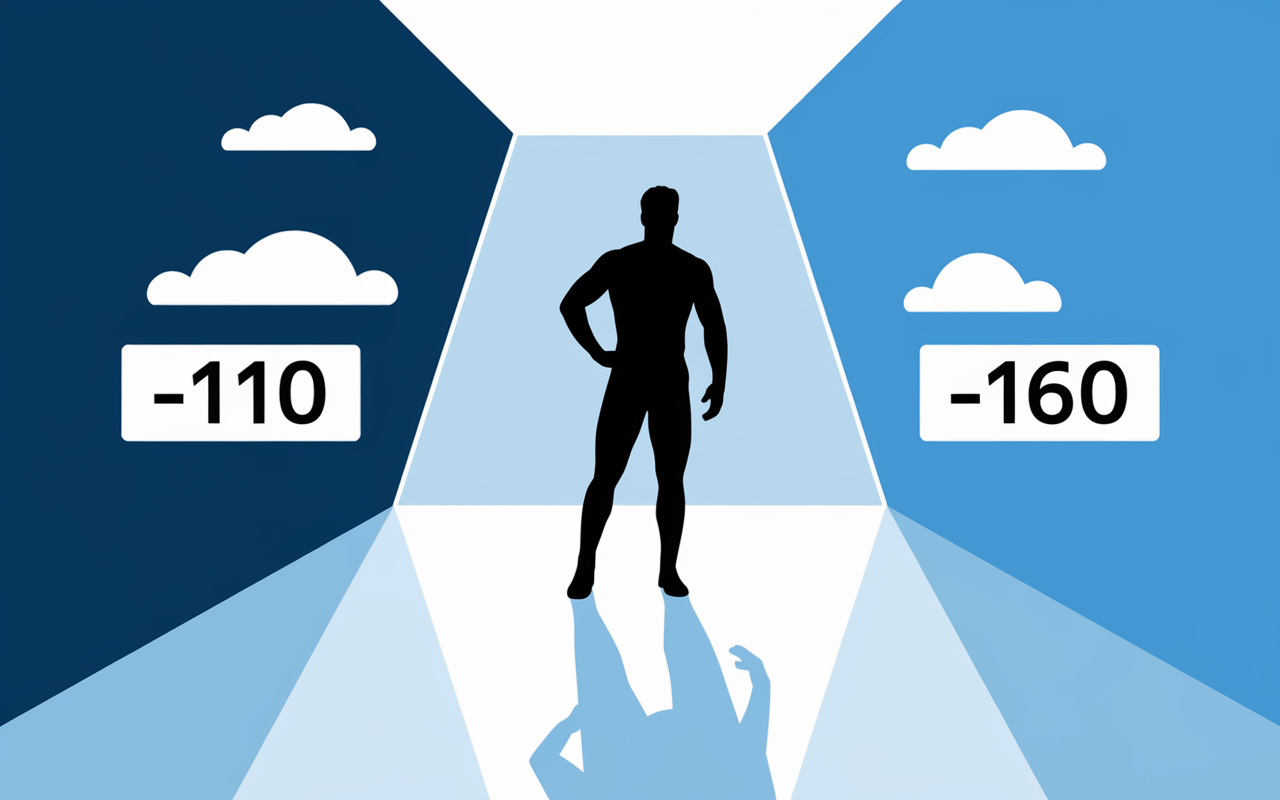
In practice, voluntarily exposing yourself to extreme cold, generally between –166°F and –256°F (chamber, for 2 to 3 minutes), solicits the body in two ways. First, vasoconstriction reduces inflammation and swelling; then, the vasodilation that occurs once warm “drains” muscles and tissues, evacuating metabolic waste, which promotes cellular repair. Studies cited below report measured pain attenuation and superior functional recovery, especially 24 to 72h after significant effort. It’s this “recovery sprint” that attracts many athletes, beyond the simple immediate analgesic effect.
On the center side and according to protocols, a session often costs around $55. As for frequency, 2 to 3 times per week is often recommended for the most dedicated. The euphoric effect of cold isn’t just a myth: it releases a real cocktail of endorphins and catecholamines, stimulating and generating well-being, which can become particularly sought after… especially (recurring anecdote) among those hesitant to take the first step.
How Does Cryotherapy Work on Muscle?
Behind its technological appearance, cryotherapy rests on a simple physiological principle – thermal shock stimulates blood flow and influences inflammation mediators. But concretely, what changes at the muscle level?
Vasoconstriction, Vasodilation and Muscular “Flushing”
As soon as the body (or a specific zone) is exposed to intense cold, vessels contract to preserve vital organs. This vasoconstriction temporarily slows circulation in muscles, braking the arrival of new inflammatory molecules at the origin of pain and swelling, the famous DOMS (“Delayed Onset Muscle Soreness”).
After the session, when body temperature rises, sudden vasodilation is regularly observed: circulation resumes, facilitating elimination of lactic acid and other metabolic waste. This step would promote repair of micro-lesions induced by demanding training (a physical therapist recently mentioned that some athletes see their condition improve faster after this “flushing” phase).
Endorphin Release and Pain Perception Modulation
In response to cold, the brain secretes endorphins: a true natural shield against pain, but also a source of good mood and renewed concentration. According to many gym testimonials, this mental effect is relatively appreciated during high-intensity periods. Studies, notably those referenced on fitness platforms, confirm that these neurohormones increase rapidly after the session.
One might wonder: why, after a cryo session, does a feeling of momentum appear so often? It’s nothing magical: cold boosts moral energy, where pain could slow motivation (a physical trainer recounts seeing his clients leave “boosted” right out of the chamber).
Concrete Benefits for Recovery and Performance
Beyond physiological mechanisms, what are the real visible gains after using cryotherapy in bodybuilding? Its main interest, for many, lies in the speed and cumulative effect obtained when it’s part of the routine.
Reduced Soreness and Accelerated Recovery
According to a study relayed by fitness research, muscle strength, notably quadriceps, maintains better: the observed loss is only 7% at 24h after cooling, versus 15% without assistance. In practice, returning to “optimal” form accelerates to quickly resume sessions.
Many regular users (especially those preparing for competitions) also note a subjective decrease in pain from the next day. Less soreness also means less risk of injuries from compensatory movements or prolonged fatigue (a sports nutrition trainer mentioned a tendency to accumulate small injuries in the absence of active recovery).
Injury Prevention and Psychological “Reset” Effect
Long term, repeating cold sessions seems to decrease the frequency of tendinitis and micro-injuries, particularly among heavy load enthusiasts. Several athletes give the image of a mental “reset”: they stay focused and motivated, even when the training cycle intensifies.
In short, the session can become a real parenthesis: these three minutes separate stagnation risk from the pleasure of pushing limits… Without forgetting it’s better to bet on minimum caution, it’s not a miracle solution for everyone either.
Protocols, Usage Modes and Adjustment in Bodybuilding
Finding the perfect balance isn’t an exact science, but with gym experience and clinical studies, certain benchmarks emerge.
Whole Body or Localized Zones? “When” and “How Many Times”?
Whole body cryotherapy (WBC) is generally preferred when aiming for global recovery and systemic effect. The session takes place in a chamber at –166°F/–256°F for a duration of 1 to 3 minutes, preferably just after intensive training or at the latest within two hours. Conversely, localized cryotherapy (LC) targets a specific area (quadriceps, shoulders, for example). It’s more flexible, often less expensive, even if the general effect is less marked.
Some concrete benchmarks to remember:
- 2 to 3 sessions/week preferred on leg or back cycles, and after significant efforts
- Typical duration: 2–3 min in chamber for whole body, 10 to 15 min for LC
- Avoid practicing on empty stomach; good hydration after each session is often recommended
- Respecting a 48h pause between two sessions remains relevant for most profiles
Still hesitating on the approach? There’s no universal formula: testing progressive integration will allow adjustment according to physical recovery and feeling (it’s often noted that individual adaptation gives the best results).
Hybrid Protocol and Active Recovery
Currently, several specialized coaches regularly advise combining cryotherapy, active recovery (light cycling for example), and adapted nutrition after the session: cold attenuates inflammation, light movement optimizes blood circulation, and protein/carbohydrate intake facilitates muscle regeneration.
It’s also noted that everyone reacts differently: some see clear benefits, others less, somewhat like the debate between home ice baths and professional cryotherapy (a coach recently recounted regularly testing both methods depending on felt fatigue).
Cryotherapy Versus Other Recovery Methods
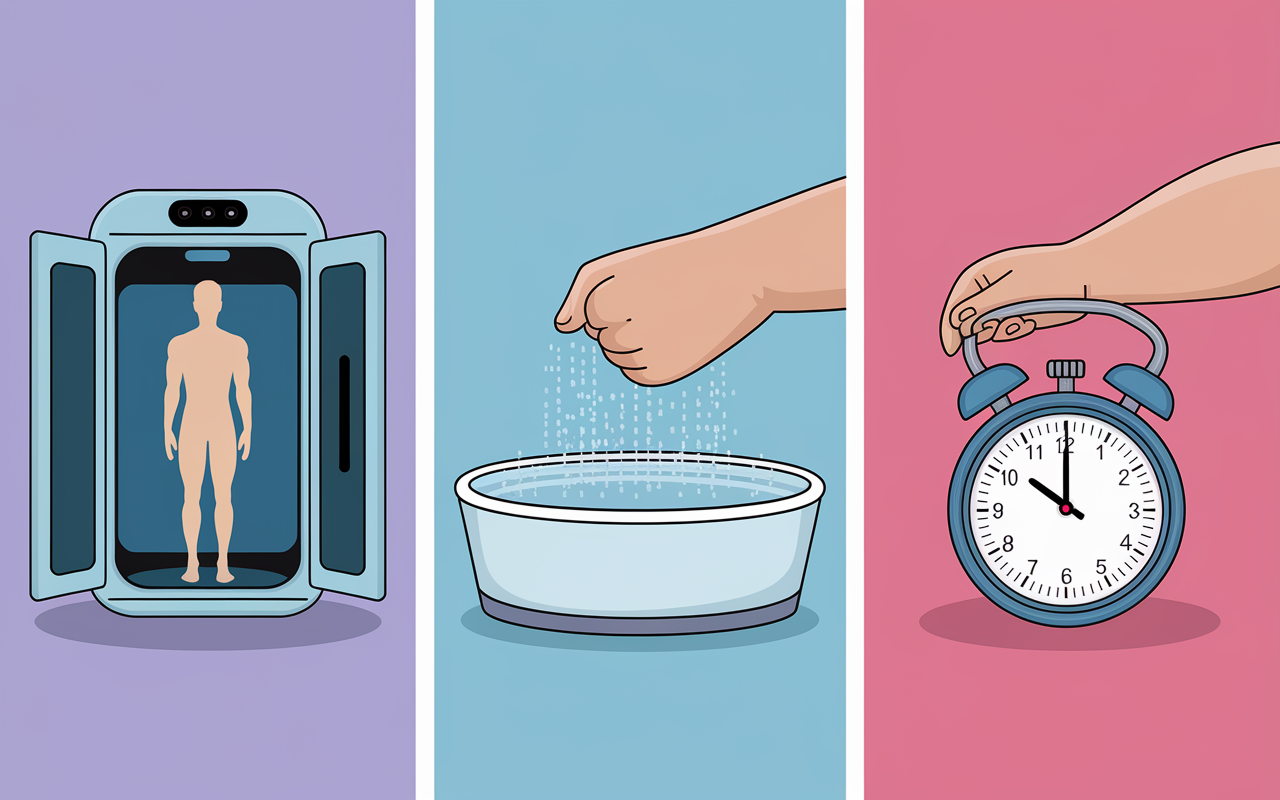
The question deserves asking: for muscle recovery, is it better to choose cryotherapy or an ice bath at home?
| Method | Exposure Time | Effect on DOMS/Soreness | Accessibility | Average Price |
|---|---|---|---|---|
| Whole body cryotherapy | 1-3 min (<-166°F) | +++ | Specialized centers | $55 |
| Cold immersion (<59°F) | 10-20 min | ++ | Bathtub/home | $2-5/session |
| Massage | 20-40 min | ++ | Everywhere | $45-80 |
Last point to recall: cryotherapy, faster, gives a marked systemic effect; its cost and need for a qualified center are its main brakes. Ice bath, meanwhile, remains very accessible and reputed effective, but proves longer and doesn’t provide the same “endorphin boost” after session (a recovery expert noted that the mental effect differs markedly depending on method).
Scientific Evidence: What Do Studies Say About Real Effectiveness?
Main studies converge on anti-inflammatory interest and DOMS attenuation, between 24 and 96h after cryotherapy – a synthesis shared by research platforms points to a particularly significant effect: quadriceps strength is reduced by only 7% at D+1, versus 15% without intervention.
But for muscle mass evolution (hypertrophy) and very long-term performance, scientific conclusions remain relatively nuanced: cold decreases functional discomfort, however nothing shows it actually accelerates muscle growth. That said, quickly regaining tone promotes training intensity and continuity, which is also why some experts consider it an ally in the medium and long term.
Is it therefore a miraculous accelerator? No, but it’s true that in terms of muscular availability, the cold effect, used wisely, proves precious for those seeking regular progress.
Precautions, Safety and Contraindications: Caution Before Cold
Health authorities as well as professionals have insisted for several years on rigorous supervision and prior medical advice – imperative for people suffering from cardiac, respiratory disorders, or certain metabolic pathologies.
Center visits always include a health questionnaire, hydration advised after each session (cold often dries more than imagined), and individual monitoring if the protocol is repeated. You don’t play with temperatures of –238°F!
Among the strictest contraindications: serious circulatory disorders, cardiac history, pregnancy, dermatological diseases weakening the skin. At the slightest doubt, better to consult a practitioner, it’s a principle no one questions.
Concrete Testimonials: What Practitioners Say
Julian, coach and fitness YouTuber followed by 220,000 subscribers, highlights express recovery “without persistent fatigue” after his leg cycles. Many bodybuilders, cited in specialized forums, alternate between whole body cryotherapy right after important sessions (heavy press, deadlift) and localized, adapting frequency to felt fatigue.
An example: Marine, 34, in competition prep, alternates two WBC sessions each week on big leg and back cycles and localized when pain occurs. Her feedback: “the mental boost, the feeling of starting from zero,” which she mentions to her training group.
Listening to these practitioners, the psychological benefit would sometimes be more striking than the pure physical gain: “This endorphin peak relaunches me, especially when I struggle to find the will,” testifies Thomas, 29 (this kind of statement is often cited at sports and recovery conferences).
FAQ: Your Key Questions About Cryotherapy in Bodybuilding
Does cryotherapy really reduce soreness after lifting?
According to the cross-referencing of studies and field experience, a noticeable decrease in DOMS is generally observed from 24 to 48h, allowing quick resumption of the most demanding workouts.
How much does a session cost and are there packages?
Average rate is $55 per session at a center; packages exist that reduce the bill for 10 sessions and more.
What’s the difference between whole body and localized cryotherapy?
WBC acts on motivation, hormones, and the entire body. Localized variants (portable device or cold plate) target an area – less euphoric, they remain more financially affordable.
Is medical advice needed to start?
Serious centers almost systematically require a health questionnaire and medical authorization before first cold exposure.
Are there home alternatives?
Suggested alternatives: ice bath (tub or bucket), ice packs or cryo-pack. These methods remain useful, but the felt effect is less dramatic in terms of speed and motivation.
Practical Resources and Guides to Go Further
Want to test or adapt your recovery strategy? Download the PDF guide on bodybuilding/cryotherapy recovery (value $52 free), or do a quick simulation with our mini-diagnostic.
Final overview:
- Powergym article on cryotherapy in bodybuilding
- Nutrimuscle – Cryotherapy and muscle recovery
- Cryotera – Benefits of cryotherapy for sport
Need advice or want a personalized program? Contact a recovery expert coach or subscribe to the newsletter to receive testimonials and tips from the bodybuilding & performance community.