The world of French design is constantly evolving, and Christophe Delcourt stands out as one of the few who combines contemporary demands with respect for artisanal craftsmanship. From his first hand-crafted creations to his international recognition, he successfully combines authenticity with a commitment to sustainability, inviting everyone to reflect on the value of furniture designed to last, far from fleeting trends, in a daily life centered on responsibility.
Christophe Delcourt: French designer, craftsman of beauty and sustainability
Driven by a passion for noble materials and refined lines, Christophe Delcourt now holds a central place in French contemporary furniture. Since opening his Parisian workshop in 1998, he has been creating exclusive furniture and lighting, appreciated for their authenticity and welcoming minimalism. Many wonder what personality lies behind these sculptural tables visible in showrooms; the answer regularly remains the same: Delcourt embodies the meeting between artisanal authorship and responsible design. A name that intrigues as much as it reassures, especially when originality becomes a decisive criterion.
Biography & artistic journey
A native Parisian, born in 1966, Christophe Delcourt trained in cabinetmaking before launching into the adventure of his own workshop at age 32, in the 11th arrondissement. This almost behind-closed-doors choice allowed him to test, to invent: each piece of furniture is born under his fingers, guided by a love of wood and a pronounced taste for clean curves. A trainer mentioned that at the start, his first prototype (a solid beech table) required more than 60 hours of work—proof that patience, sometimes staggering, remains his discreet signature.
A journey punctuated by encounters and breakthroughs
Relatively quickly, Delcourt gained attention in the world of artisan creators, notably through collaborations with Roche Bobois and Cassina. Starting in 2010, his workshop shifted toward limited editions while also offering custom work. He exhibits at events like Paris Design Week, Milan, or Art Basel—an international presence that attracts both novices and informed enthusiasts alike. For example, he was spotted in Milan in 2024, during an immersive installation on furniture sustainability, a theme dear to his heart.
- Launch of the workshop-boutique in Paris’s 11th arrondissement in 1998—a founding moment.
- First notable collaboration with Roche Bobois, initiated in 2004: a step toward high-end production.
- AD Interieurs Medal in 2017, a recognition considered essential in the industry.
- Annual participation in Paris Design Week since 2012: proof of consistency and commitment.
It’s often noted that Delcourt’s progression spans about a decade. It goes from a discreet urban workshop to an established international presence. Some professionals believe that such a trajectory only exists through constant questioning and patience.
The Delcourt style: characteristics and influences
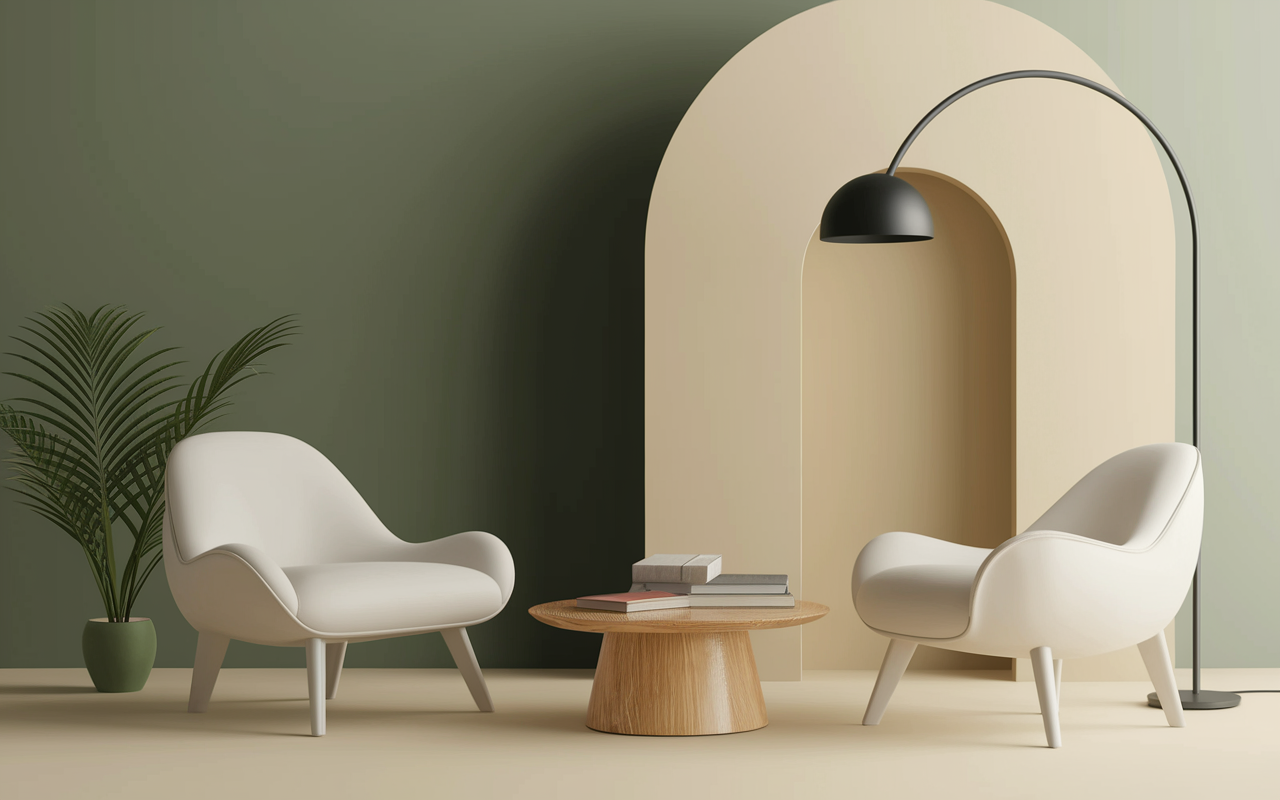
When viewing his furniture, extreme attention to detail is immediately striking. Yet, what makes Delcourt so unique? His signature could be summarized around three notions: living minimalism, raw materiality, and lasting elegance.
Clean lines and noble materials
Why does the “Delcourt style” come up so often among experts? Mainly because it favors solid woods (oak, ash, beech) combined with metal, brass, or ceramic, with soft yet structured forms. His palette remains deliberately neutral (beige, gray, deep green), reflecting notable Scandinavian and Japanese influences.
- Systematic use of oak from local supply chains: a choice valued by clients concerned about origin.
- Traditional techniques revisited for modernity, rooted in craftsmanship but designed for today.
- Furniture inspired as much by Danish design (Arne Jacobsen) as by Japanese wabi-sabi: a subtle balance between functionality and organic poetry.
- Design focused on longevity, with warranties that can extend up to ten years depending on the model.
From a practical standpoint, custom production requires a handful of steps over approximately 8 to 12 weeks, depending on the degree of complexity; one can assume that this accepted timeframe contributes to quality control and raw material sourcing. Some clients report that waiting sometimes becomes a key part of the experience.
Hybridization between craftsmanship and modern production
What often stands out is how Delcourt marries artisanal heritage with the demands of modern production without visible compromise. Since 2016, his line produced for Roche Bobois has been distinguished by its faithfulness to his principles. Connoisseurs readily compare him to Patricia Urquiola; Delcourt, however, leans more toward restraint and discretion, and insists on the traceability of the woods used. A gallery owner recently mentioned that this transparency makes the difference when clients seek a unique piece.
Iconic pieces & major collaborations
Certain objects quickly bear his mark: the Join table (modular, wood and brass), the Mistral chair, or the Ripple lighting fixtures are among the bestsellers of the edition. On the Cassina side, consoles and coffee tables are regularly exhibited in boutiques from Milan to New York. Notably, the Join console, edited at 50 copies per season, often sells out in less than two months; according to several buyer reports, the waiting list sometimes exceeds thirty people.
Spotlight on three flagship pieces
Keep in mind during a showroom visit:
- Join Table: combination of solid wood and brass, average price around $7,500 to $9,200.
- Mistral Chair model with wood and leather structure, offered starting from $1,030.
- Ripple Lighting: wavy design, limited edition, price from $2,280 to $3,030 depending on size.
For some, waiting up to four months for a custom piece is part of the journey; a professional admitted that one ends up forgetting the wait time once the object arrives. In the end, when you want real custom work, it’s not always easy, but it’s worth it.
Collaborations and international presence
Unique projects also emerge through his collaborations with architects and galleries. In 2025, Delcourt signed an installation for Art Basel, then a capsule collection with Roche Bobois for summer: proof that his design crosses borders while remaining identifiable. If exclusivity appeals to you, these limited editions often become signatures in an interior.
Where and how to buy authentic Delcourt?
With the multiplication of copies and unofficial platforms, acquiring a piece signed by Christophe Delcourt sometimes requires increased vigilance. To guarantee a secure purchase, it’s better to turn to certified channels or contact the workshop directly.
Official points of sale and anti-counterfeiting vigilance
Most collections are accessible in partner showrooms in Paris, Lyon, and Geneva (at Roche Bobois, Cassina, or via the official website christophedelcourt.com). Spotting the “Delcourt edition” badge and checking legal notices often constitutes the best insurance against low-quality reproductions. Some experts recommend being wary of resale platforms, where authenticity remains random and pricing frequently higher: it’s not uncommon to see a premium of approximately +25% compared to the official price.
- Main showroom address: 10, rue de la Fontaine au Roi, 75011 Paris, recommended starting point for a visit.
- Roche Bobois distributor: network of twenty locations in France, convenient for comparing multiple models.
- Official website: catalog, collections, contact: reliable and comprehensive source.
- Direct contact with the workshop for any custom request: personalized approach often preferred.
As an example, a Delcourt Join edition table generally displays a price between $7,500 and $9,200, an amount justified by artisanal quality and material traceability. Some showroom advisors emphasize that this investment is generally based on the piece’s longevity rather than its trend effect.
Ordering custom work and contacting the workshop
It’s regularly recommended to place an order directly with the workshop: the online portal and personalized appointments remain the favorite options. The process includes a creative brief followed by a quote provided within seven days, then a production period generally between two and three months. If your home decor is particular, nothing prevents you from attaching an inspiration photo to the request; it seems the team willingly adapts to specific aesthetic choices, according to several client testimonials.
Frequently asked questions – quick guide
Hesitating between two models or don’t know where to start? Here’s what can be noted to quickly answer common questions about Christophe Delcourt:
FAQ
| Question | Useful Answer |
|---|---|
| Who is Christophe Delcourt? | Designer and cabinetmaker, founder of the Delcourt workshop, recognized for minimalist and natural furniture since 1998. |
| Where to buy his creations? | In official showrooms in Paris, at Roche Bobois, Cassina, or on his website. It’s better to choose certified points of sale. |
| What are the average prices? | Signature tables between $7,500 and $9,200, Mistral chair starting from $1,030, lighting from $2,280 to $3,030. |
| How to order a custom project? | Contact via website or showroom, quote in less than a week, production time generally estimated between two and three months. |
| Does Delcourt collaborate with other brands? | Yes, mainly Roche Bobois, Cassina, and galleries in Paris, Milan, New York. |
If a question remains, it’s worth calling his workshop: several clients emphasize that the welcome is pleasant, and the advice is quick… and sometimes, Christophe Delcourt himself takes the time to chat with demanding buyers. This is also why the experience appeals, well beyond the furniture.