At a time when gender parity is slowly progressing in major institutions, the profession of female orchestra conductor illustrates how talent, determination, and diverse career paths can transform a world still tinged with exclusion. Drawing on recent data and tracing the vibrant journeys of pioneers, this analysis highlights the plurality of voices, concrete advances, and persistent obstacles that mark the path toward broader recognition of women conductors in 2026. The discussion naturally invites further reflection and moving beyond conventional frameworks.
Key Takeaways
- Representation of female conductors remains low but talents are emerging.
- Many historical pioneers paved the way despite obstacles.
- Modern initiatives and resources support the visibility and training of women conductors.
Who Are Female Orchestra Conductors?
Long overlooked, the female baton is now gaining much more visibility, even though statistics still tell a story of scarcity – less than 5% of orchestra conductors in France are women. Yet behind this low percentage, we discover remarkable trajectories and a wave of new talents gradually reinventing the orchestral world. But what does being a female conductor actually entail in 2026? According to some testimonials, fame isn’t enough: you constantly have to prove your legitimacy, sometimes even convincing your peers with every project.
Definition and Current State in 2026
Conducting an orchestra is much more than guiding musicians: it’s uniting a common energy around a score while asserting your own vision. This role requires charisma, attentive listening, diplomacy, and extraordinary endurance – qualities often mentioned by experienced instructors. This role remains among the most emblematic – but also least accessible – in the classical sector. According to recent studies, only 10 to 15% of major conducting positions are held by women in Western Europe. Do you personally know many female conductors? For most of us, the answer remains no… and that’s where the problem lies.
Toward Growing Recognition
Recent media coverage, the momentum of movements like #MeToo, and the proliferation of classical streaming services have helped give visibility to several female conductors, but there’s still a long way to go. For example, a catalog featuring over 3,000 videos of concerts conducted by women demonstrates an unprecedented effort toward openness. However, many experts insist: behind certain highly publicized profiles, it’s worth looking into how their stories were built and the sometimes complex context in which they operate. Some orchestras, moreover, choose to display their support for diversity by regularly inviting young female conductors for premieres or masterclasses.
History of Pioneers and Notable Figures
Since the 19th century, women’s presence in orchestra conducting has been forged through obstacles, boldness, and sometimes memorable moments. From conservatories to major European halls, the first female conductors paved the way alone, often without mentors or networks. An instructor recently mentioned how the feeling of isolation was lasting for some pioneers, especially before the 1980s.
Fascinating Figures from the 19th Century
The story begins with pioneering personalities such as Emma Roberto Steiner – famous for having conducted up to 7,000 concerts (!) in the United States at the end of the 19th century – and Antonia Brico, the first woman admitted to conduct the Berlin Philharmonic in 1930. Europe, at the same time, remained more reserved: we still remember Nadia Boulanger, a renowned conductor and pedagogue who gave nearly 3,000 concerts throughout her career. It’s often noted that simply daring to raise the baton was already a real achievement for them. Is it really a coincidence that so many stories still resonate today?
Progressive Advances After 1945
The post-war period saw the doors of major orchestras open slowly: it takes time for a female conductor to establish herself at the head of a permanent ensemble. Between the 1980s and 2000s, we finally see female conductors named to lead major institutions: the Baltimore Philharmonic with Marin Alsop in 2007, the Paris Orchestra with Laurence Equilbey in residence since 2015. While Brazil, China, and Finland slowly invested in this area, France continued catching up. Some teachers remember heated debates defending women’s candidacies for conducting positions just ten years ago.
Portraits and Biographies of the Most Influential in 2025-2026
Here, the narrative becomes more personal: recognized conductors, emerging artists, or unconventional talents all inspire the next generation in practice. Some have become true references for conservatory students… and well beyond. Several anecdotes could be shared about first auditions where the “new voice” prevailed against all expectations.
A 2026 Panorama: From Marin Alsop to Melisse Brunet
Here’s an overview of particularly notable female conductors in 2025-2026, along with their major career paths and main achievements:
- Marin Alsop (United States): First woman to conduct the Baltimore Symphony Orchestra, then the Vienna Radio Symphony (2019-2025), notably awarded the Hans von Bulow Prize in 2021.
- Nathalie Stutzmann (France): Recognized as one of the most remarkable of her generation, she has been principal conductor of the Atlanta Symphony Orchestra since 2022, following a long career as a contralto.
- Simone Young (Australia): Music director of the Sydney Symphony Orchestra, regular guest in Vienna, Berlin, and at New York’s MET; her career stands out for the originality of her repertoire choices.
- JoAnn Falletta (United States): Leading the Buffalo Philharmonic Orchestra for about twenty years, she advocates for programming works by contemporary female composers.
- Elim Chan (Hong Kong/United Kingdom): Current principal conductor of the Antwerp Symphony and Orquesta Filarmonica de Gran Canaria, noted as a revelation of the 2020s.
- Laurence Equilbey (France): Founder of Insula Orchestra, pioneer in developing early music in the Ile-de-France region, she stands out for her ambitious digital projects.
- Melisse Brunet (France/United States): Rapid progression since 2022, now active with the Lexington Philharmonic Orchestra.
- Jessica Cottis (United Kingdom/Australia): Guest at numerous European festivals, recognized for her pedagogical innovations in concert.
It’s also worth mentioning Kazuki Yamada, a male figure, but regularly cited for mentoring young female conductors within major European ensembles.
Summary: Talent, Diversity, and Recognition
What strikes most is the richness of profiles and variety of approaches: from traditional repertoire to contemporary music, opera, or digital creation. Several female conductors are now highlighted through online catalogs, specialized podcasts (such as interviews on France Musique in 2025), or expert selections supporting their institutional recognition. For some professionals, the scarcity of these figures remains the heart of attention… and probably the starting point for real change. One can assume that the arrival of new female role models in the sector will have lasting effects on the perception of orchestra conducting.
Representation Statistics and Gender Parity
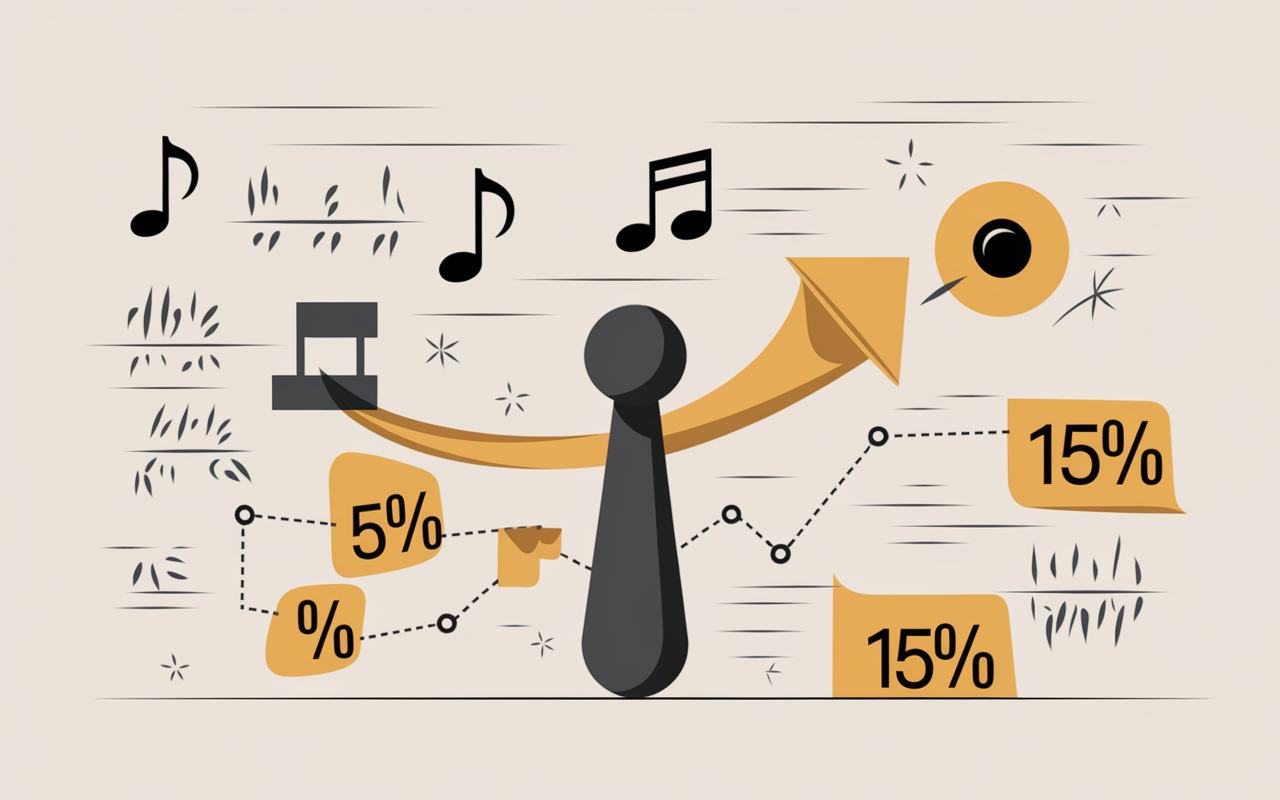
Some striking data provide a relatively precise overview of the remaining challenge. Even in 2026, discussing parity remains far from actual balance… Several experts interviewed last year emphasized the lack of suitable training from an early age: “As long as conducting remains a late career choice, we shouldn’t expect improved numbers.”
Snapshot – Where Do We Really Stand?
In France, less than 5% of active orchestra conductors are women, while between 20 and 30% of performing musicians are female. The rate of female composers in programmed works catalogs barely exceeds 10%. Internationally, the symbolic threshold of 15% of female conductors appointed to lead major orchestras remains difficult to cross.
| Indicator | 2026 Figure |
|---|---|
| Female conductors in France | Less than 5% |
| Female composers programmed | 10% |
| Female performing musicians | Between 20 and 30% |
| Concerts conducted by E.R. Steiner | 7,000 |
| Concerts conducted by N. Boulanger | 3,000 |
Looking at the programming of major festivals (Aix, Salzburg, BBC Proms), the proportion of invited female conductors is rising… but the group remains largely in the minority. Moreover, presenting these figures also raises the major question: How do we explain such slowness? A festival director recently emphasized how internal decision-making continues to hinder women’s access to conducting positions.
Challenges and Testimonials from Current Female Conductors
The success observed among some female conductors shouldn’t overshadow persistent difficulties. Their testimonials, often striking, expose the reality of fighting against persistent stereotypes – from the audition process to taking up the position. But mindsets are evolving, even if change remains very gradual.
A Path Often Full of Obstacles
Many anecdotes circulate: such as the competition where a 35-year-old conductor was auditioned behind a screen to avoid gender bias, or another who was asked to “look like a traditional conductor,” meaning male and authoritarian… According to some testimonials, it’s not uncommon to hear a veteran conductor recall that humor and pedagogy are essential resources, even if the famous glass ceiling remains a recurring obstacle. For example, Elim Chan revealed in a podcast that “mastering Beethoven isn’t enough; the hardest part is having your legitimacy recognized with every daily gesture.”
Sometimes orchestras take the initiative to open inclusive applications or launch dedicated masterclasses (the Paris Orchestra, Lyon, ONPL, or Insula Orchestra are regularly cited). These are quiet victories that generate great hope in professional networks.
Collective Initiatives and the Role of Networks
Associations like “La Maestra” (Academy at the Paris Philharmonic), connected programs (Frequence Maestra podcasts, mobile apps), or awards like “Emerging Conductor” contribute significantly to promoting the profession. Several female conductors also praise the precious support of male mentors: thus, Kazuki Yamada doesn’t hesitate to recommend his female colleagues to major institutions, which isn’t so common in other artistic sectors.
In France, progress sometimes remains slow, but the generation of female conductors from Paris and Lyon conservatories is beginning to take center stage. Some professionals confide that the network effect has been decisive over the past five years.
Good to Know
I recommend following programs and masterclasses like “La Maestra” that actively encourage the training and visibility of female conductors, as they play a key role in accelerating recognition in this field.
Resources and Further Reading
For those who want to go further, it’s never been easier to access a variety of resources: educational tools, testimonials, concerts available on VOD, specialized podcasts, or downloadable guides. Digital technology, often accused of diluting institutional memory, becomes here a valuable tool for highlighting the “invisible” paths of the previous generation. A conductor sometimes recommends online videos in her masterclasses that are rarely known to the general public.
Cultivating Curiosity: Access and Practical Tools
Some useful references:
- Female conductors VOD catalog: a selection of over 3,000 videos, archives, and exclusive recordings, often presented on major institutions’ websites.
- Specialized podcasts – “Frequence Maestra” (France Musique), “She Conducts” (BBC), original series on streaming platforms, regularly discussed by professionals.
- Practical guides: “Becoming a Female Conductor,” available on the Ministry of Culture and Philharmonic websites: highly appreciated in the conservatory community.
- Annual schedules and calendars: Radio France, Mediapart, or Classicalmusic.com websites update key news and selections each semester.
We also recommend checking out the interactive glossary at the bottom of the page, which – finally! – helps navigate the often elitist jargon: Maestra, assisted orchestra conducting, or gender parity assessment will hold fewer secrets.
Some Essential Links
To complete your exploration, here are three paths to confront different perspectives:
- Francemusique – influential female conductors 2025
- Classicalmusic.com – top female conductors
- Mediapart – portraits and testimonials 2026
Why not organize a group listening session this weekend with family or in class? Some testimonials show that music is also about discovery and sharing, far more than just academic transmission…
FAQ About Female Orchestra Conductors
Need clarity on some concrete topics? Here are some answers to read before continuing your exploration or signing up for future discoveries!
Who are the most famous female orchestra conductors today?
Marin Alsop, Nathalie Stutzmann, Simone Young, JoAnn Falletta, Elim Chan, and Melisse Brunet are often cited among the essential female conductors, both by institutions and in reference VOD catalogs and podcasts. Their careers inspire and gradually change the sector’s norms.
Why are there so few women orchestra conductors?
Institutional inertia, stereotypes about musical authority, often restricted access to professional networks, and lack of female role models are major factors. The glass ceiling is now the subject of many discussions: but we see that feminization is progressing slowly, stimulated by targeted associations and initiatives. A conservatory instructor recently recalled that “it sometimes takes two generations to change the codes.”
Who was the first professional female orchestra conductor?
Emma Roberto Steiner (United States) and Antonia Brico (Europe) remain pioneering figures: Steiner reportedly led up to 7,000 concerts at the end of the 19th century, while Brico was the first woman to conduct the Berlin Philharmonic in 1930. However, some musicologists note: women sometimes conducted regional ensembles earlier, even if their names are now forgotten.
Which orchestras are conducted by women in France?
In 2026, Laurence Equilbey conducts Insula Orchestra, Nathalie Stutzmann is regularly invited to the Paris Orchestra, Melisse Brunet conducts the Lorraine Philharmonic Orchestra, and several young female conductors are seen in Lille, Lyon, Montpellier, or Bordeaux (some are invited for unique projects).
How do you become a female orchestra conductor?
In France, the classic path goes through the National Superior Conservatory, with a specialization in “orchestra conducting,” followed by auditions and internships with various orchestras, often supplemented by continued international training. The development of female mentoring initiatives, masterclasses, and “Young Conductors” programs has clearly intensified since 2017. Some testimonials show that an internship abroad can be decisive in clearing the final hurdles.
Additional resources to explore:
- Multi-platform VOD catalog (over 3,000 videos of concerts and masterclasses, appreciated by professionals)
- “Frequence Maestra,” “She Conducts” podcasts, and other specialized programs
- Glossary and interactive timeline on medici.tv or the Paris Philharmonic website
Finally, don’t hesitate to subscribe to our future selections or ask new questions: the classical world is opening up to diversity, and female curiosity contributes to its influence… even if, as many say, it’s not always easy.